
Free: 96 PPC tools + my AI Playbook book

Garage door is one of those 'I need this fixed today' categories. Spring broke, door won't open, car is trapped. They're not reading your About page. Phone number, service area, 'we come today'. That's it. The pages that overcomplicate this are just losing calls.
From real garage door services Google Ads campaigns in the US
The landing pages actually worth stealing from
So you know exactly what to avoid
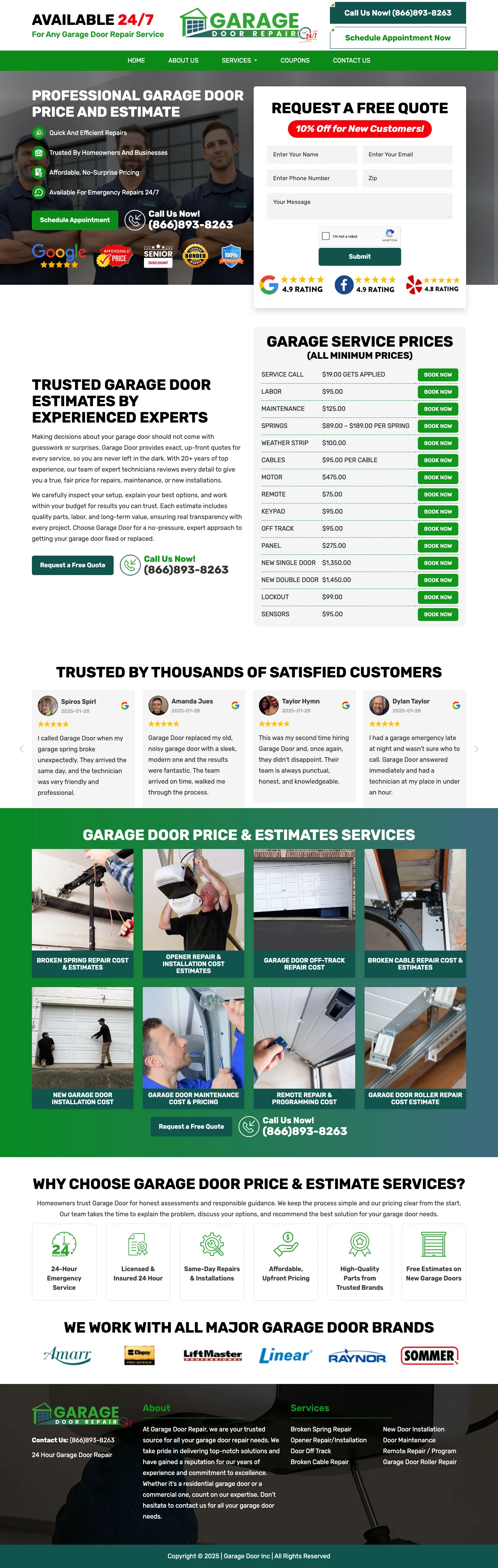
Publish your actual service prices as a plain HTML table on your landing page. Every competitor in garage door PPC hides pricing behind a form because they think it protects their margin. It doesn't, it just tells the visitor you're the bait-and-switch they're already afraid of. Sonic's table is the single most effective scam-fear-killer we saw in the entire sample.
'Garage Service Prices (All Inclusive)' table with 25 line items (spring replacement, cable repair, opener install, panel replacement) turns the most-feared question in the category into an above-the-fold content asset
'Call Now' button with phone number (866-895-8263) rendered in 24pt green on white is impossible to miss, the phone number IS the page's H2
Header bar '$50 Off For New Customers' ties a specific dollar discount to new-visitor intent without making it the whole hero, the price table is the hero, the discount is the closer
The price table is a plain HTML grid without any visual hierarchy, the highest-margin services (spring replacement, opener install) could be highlighted to nudge the visitor toward the higher-AOV call
Testimonial cards at the top are labeled 'Quality Review' with generic text instead of actual Google Reviews pulled live. For a category this scam-sensitive, real-review widgets would out-trust fake-looking testimonial blocks
'Why Choose Garage Door & Estimate Services' section is generic reassurance (24/7, Licensed, Friendly) without any specific differentiator, the price table does the real selling and this section is filler
For emergency repair traffic, put a free-quote form and a phone number at the same visual weight in the hero, both large, both high-contrast, both above the fold. Different visitors convert on different rails. The form captures researchers who want a callback; the phone captures panic-mode callers with broken springs. Same keyword, two intents, one page.
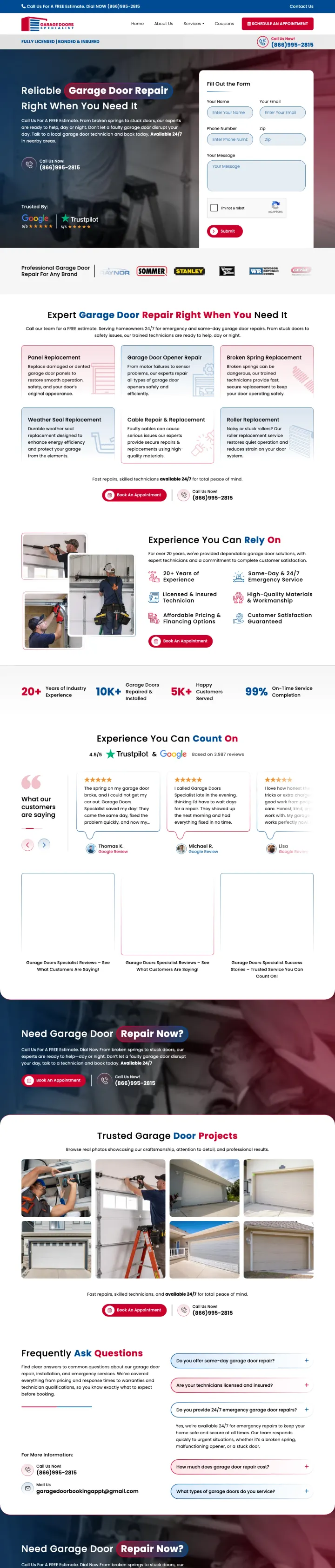
Hero form ('Request a Free Quote') and '$75 Off Any Garage Door Service' banner are visually equal-weight, the visitor chooses the mode without the page nudging either way
'Reliable Garage Door Repair Right When You Need It' headline explicitly owns the emergency frame rather than dancing around it. 'Right When You Need It' is the 'we'll be there now' promise that emergency traffic looks for
Trust-badge row (Google, BBB, Angi, HomeAdvisor) sits directly under the hero where the scam-fear objection is at its peak, badges right where the doubt would otherwise be
The big yellow/orange bar 'GET $75 OFF' competes with the page's primary red color, the offer pops but not in a way that reinforces the brand hierarchy
'What Our Satisfied Clients Are Saying' testimonial cards are blank on this capture (likely a template issue or deferred-load), which is the single worst failure mode for a scam-sensitive category
'Professional Garage Door Repair For Any Brand' footer belt with brand logos repeats the 'we work with major brands' claim but the logos are small and washed-out against the red background
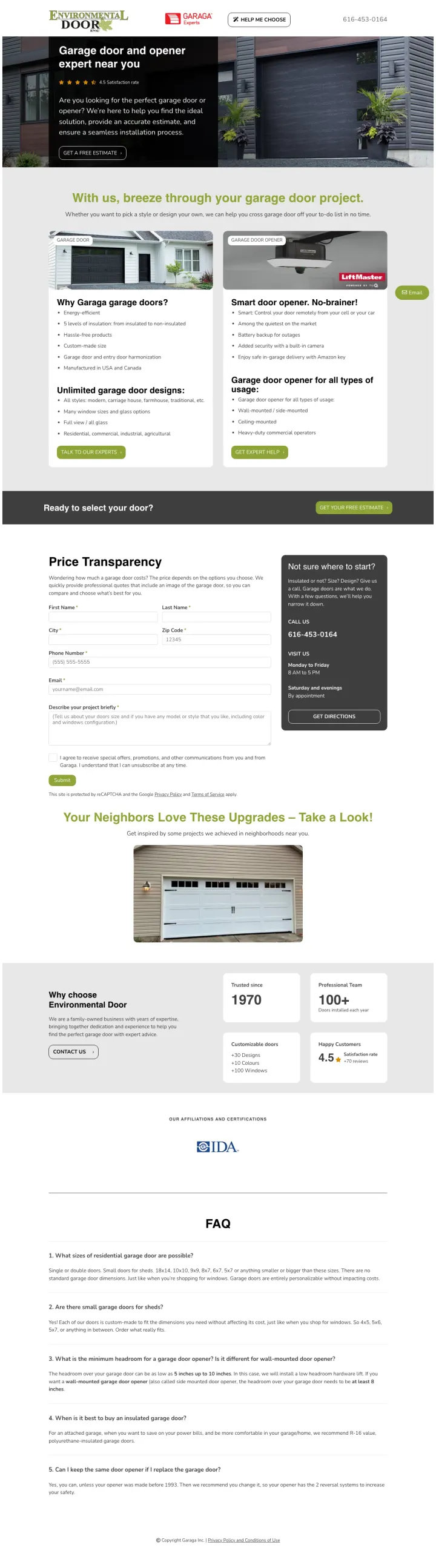
For replacement-intent searches (not emergency), lead with the door style decision, not the service pitch. Environmental Door's page is structured as a visual door catalog with 'Carriage House' and 'Contemporary' options followed by a price-transparency form. This is replacement-buyer psychology: they're shopping a product, not hiring a contractor.
Two large tile images (Carriage House / Contemporary) immediately under the hero let the visitor self-identify their style before the form asks for their info. Most repair pages force the form first
'Price Transparency' section with an inline quote form explicitly names the bait-and-switch fear and frames the form as the honest way to pricing
'Your Neighbors Love These Upgrades' social proof section uses a recent-installation photo with neighborhood context, local-specific in a way that generic testimonials aren't
The hero photo is a generic garage-door-fronted house that could be anywhere, local specificity is promised in the social-proof section but the hero doesn't deliver it
'BIDA' certification badge at the bottom is industry-insider and won't register with homeowners. A plain-English 'We're certified by [association]' translation would do more trust work
Phone number at the top is small and gray, for homeowners who'd rather call than form-fill, the phone CTA is underpowered for a replacement-AOV page
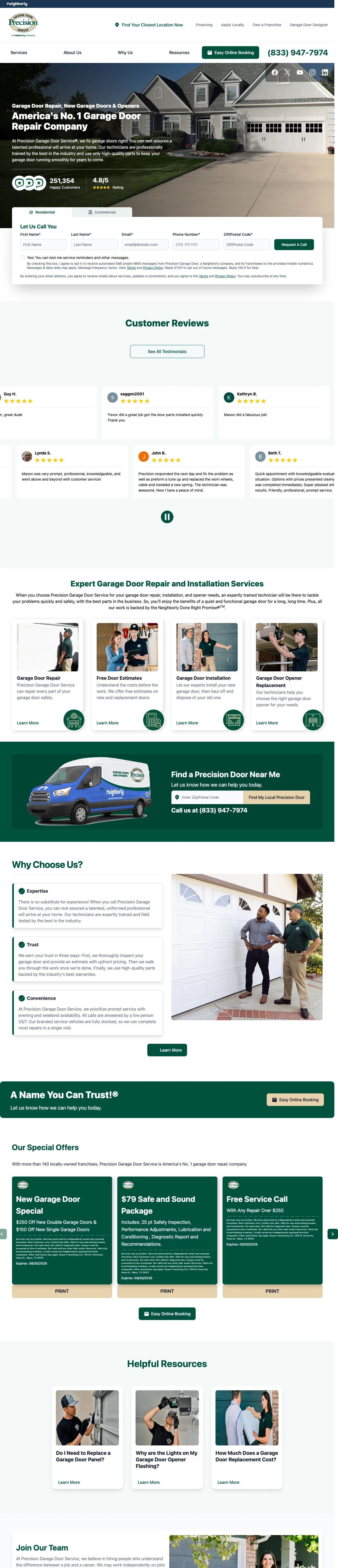
Put a 'Find My Local [Brand]' ZIP form directly below the hero so a franchise page self-localizes in one interaction. Precision runs 140+ locally-owned locations on one national domain and lets the visitor's ZIP code route them to a local phone, local pricing, and local coupons. Most franchise sites bury the locator in the nav; Precision makes it the second thing on the page.
'251,340 Happy Customers / 4.9/5' counter in the hero replaces generic 'thousands of satisfied customers' with a specific number that reads as real
ZIP-code locator ('Find My Local Precision Door') sits right under the hero so the national page converts immediately into a local experience, no nav dig required
Neighborly Done Right Promise and named special offers ($250 Off New Double Doors, $79 Safe and Sound Package) give the visitor something concrete to print or screenshot before calling
The hero image is a stock stone-house-with-wood-doors shot that could be anywhere in the country, a rotating location-aware hero would reinforce the ZIP locator's promise
The 'Why Choose Us' checkmarks (Expertise, Trust, Convenience) are generic franchise boilerplate and lose the specificity advantage the counter and the offers establish
No phone number visible in the hero on the national page until the ZIP locator resolves, emergency callers who don't want to type their ZIP get no fallback
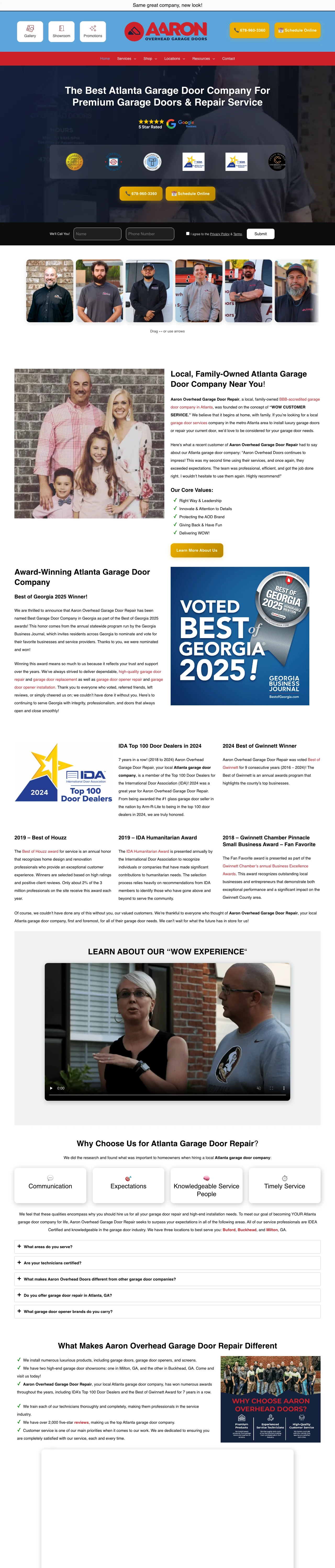
If you have trade awards and industry rankings (IDA Top 100, Chairman's Club, Best of [State]), put the actual badge images in the hero, not in the footer. Aaron stacks 9 award badges directly below the headline. In a scam-sensitive category, industry-peer recognition is more credible than customer testimonials because the visitor assumes customers can be bribed but industry associations can't.
Award-badge cluster (IDA Top 100, Best of Georgia 2025, Chairman's Club, BBB) stacked immediately under the H1 front-loads the trust work before the visitor reads a single paragraph
Dual primary CTAs 'Call 678-960-3360' and 'Schedule Online' in the hero cover both intents without hiding either, plus a 'We'll Call You' form for visitors who want a callback
Real technician headshots (Ryan, Matthew, Marco, Destin, Team Member 5-9) humanize the family-business claim, visitors see who's actually coming to their house
Base64-Image-Removed markers in the scrape suggest several award badges failed to render, worth auditing which badges actually load in production
'Our Core Values' bulleted list (Right Way, Innovate, Protecting the AOD Brand, Giving Back, Delivering WOW) is internal-culture content that belongs on the About page, not the homepage where it competes for attention with the award stack
The testimonial quote is inline prose rather than a card with a star rating and reviewer name, a widget pulling real Google reviews would out-convert the handwritten quote
Pages that break the playbook in interesting ways
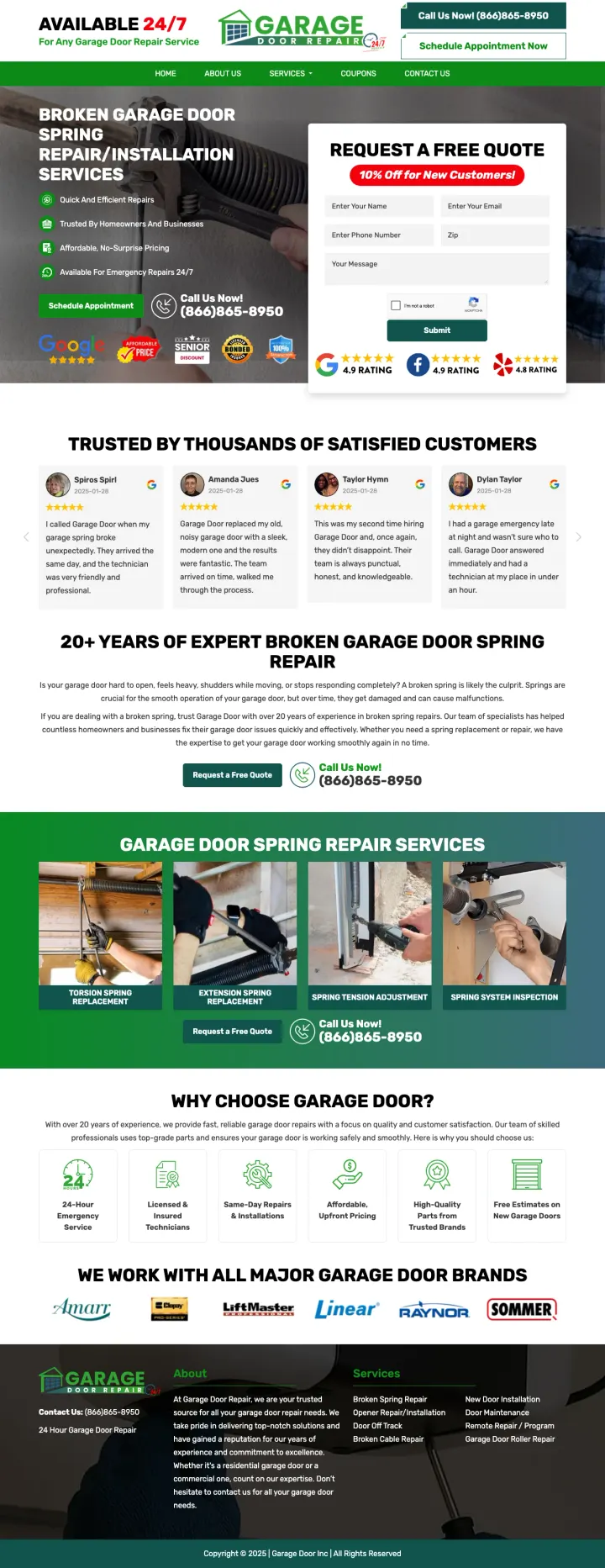
Build separate emergency-intent and considered-intent landing pages with different hero framing but the same trust foundation. Sonic's spring page leads with 'Broken Garage Door Spring Repair / Installation Services' for the panicking caller, while their estimates page leads with a price table for the planner. Two intents, two pages, one trust system.
'20+ Years Of Expert Broken Garage Door Spring Repair' subheadline pairs service specificity with authority, the visitor learns you do springs specifically, not just doors generally
Spring-repair image hero with a technician inspecting the spring assembly is functional (shows the actual part that broke) rather than decorative
'Get $50 Off For New Customers' header banner carries the same discount as the estimates page, keeping the offer consistent across intent variants
The 20-year expertise claim is prominent but no specific credentials back it up, years in business is table stakes in this industry, a license number or master-tech certification would do more
No price range for spring repair on this page. The estimates page HAS the price but the spring-specific page doesn't link or show it, a visitor bouncing between Sonic's pages has to hunt
Testimonial cards at the top are the same four names as the main price-estimates page, reused testimonials across service pages undercut the social-proof mechanic
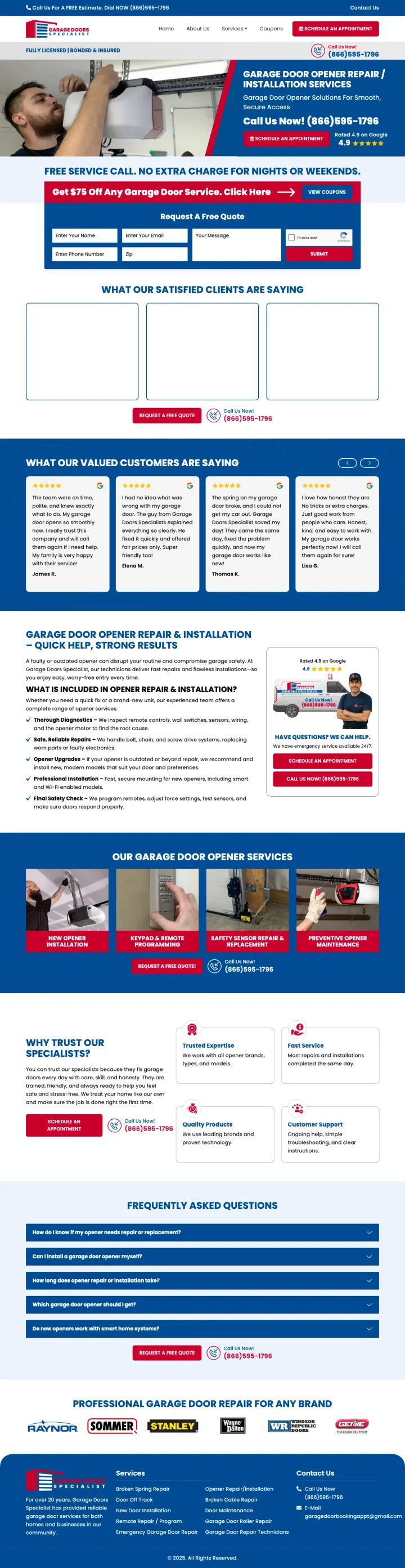
Build service-specific landing pages for your 3-5 highest-volume keyword groups (spring, opener, install, replacement). Specialist's opener page shows the template with real service-specific copy rather than location-swapped filler, and the conversion math is visibly better because the visitor's search intent is directly answered.
'Garage Door Opener Repair / Installation Services' hero headline matches the ad keyword one-for-one, no guesswork about whether the page serves the intent
Opener-specific photos in the services grid show different opener mount styles, which helps visitors self-diagnose which repair they need before the technician arrives
The opener-section content has actual depth (drives, rails, remotes, smartphone integration) rather than the generic 'we do garage door things' copy on the location variants
Testimonial cards are still blank on this variant, the template flaw that plagues the location pages also affects the service-specific pages
No opener-brand-specific trust signals (LiftMaster authorized dealer? Chamberlain certified?) even though the brand-logo belt at the footer includes these names. Missing middle-of-funnel credentialing
The '$75 Off Any Garage Door Service' banner is generic, an opener-specific offer ('$50 off new opener install') would hit harder on this intent-matched page
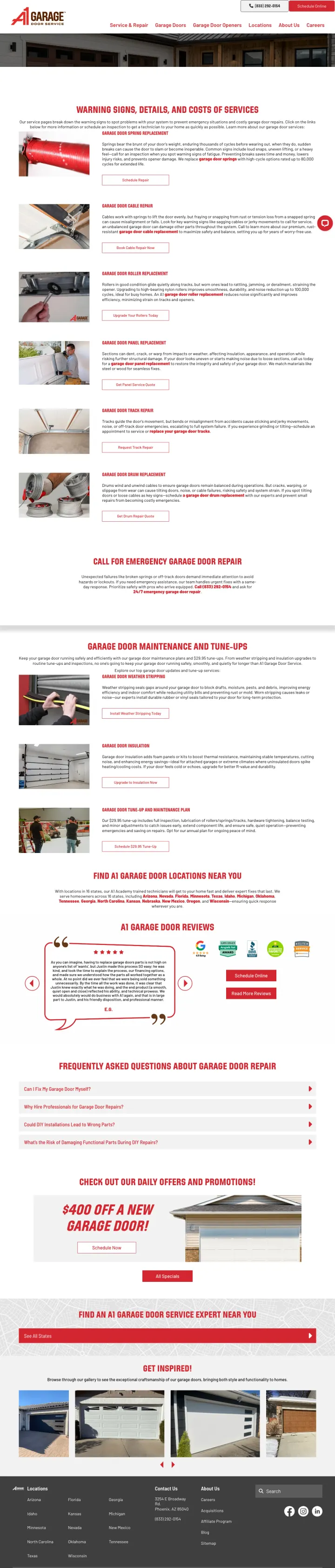
For 'garage door repair near me' traffic, A1 stacks 8 service modules (springs, cables, rollers, panels, tracks, drums, weather stripping, insulation) each with warning signs the homeowner can self-diagnose BEFORE calling. Most repair pages compress to a hero form and a phone number. A1 bets that the visitor who can name their problem converts harder than the visitor who can't, and sells diagnostic depth as the trust signal.
Each service module opens with symptoms ('loud snaps, uneven lifting, or a heavy feel' for springs) before naming the fix. Self-diagnosis content converts the confused homeowner who doesn't know whether a spring or a cable is the culprit
'Call For Emergency Garage Door Repair' band sits mid-page as a rescue CTA for visitors who hit information overload and just want the phone number
Specific cycle-life numbers ('high-cycle options rated up to 80,000 cycles', 'nylon rollers up to 100,000 cycles') replace the generic 'quality parts' claim with a quantified upgrade pitch
Hero above the fold is a small logo band, a thin headline, and a generic garage-door photo. The phone number is in the header but not large. Emergency callers who want a number in 3 seconds get buried under an educational essay
Every service module ends with three different CTA variants (Call Now, Schedule Repair, and a third action button per service). Decision fatigue kicks in by the third module and the page teaches the reader to scan past CTAs
Reviews carousel is buried below 6 screens of service copy. In a scam-fear category this is the single most important trust signal and it's hidden where most visitors never scroll
5 pages burning ad spend with fundamental issues
Every click to these pages costs real money. We found broken trust signals, mismatched intent, weak CTAs, and messaging that ignores what the searcher actually typed. Here is what to avoid.
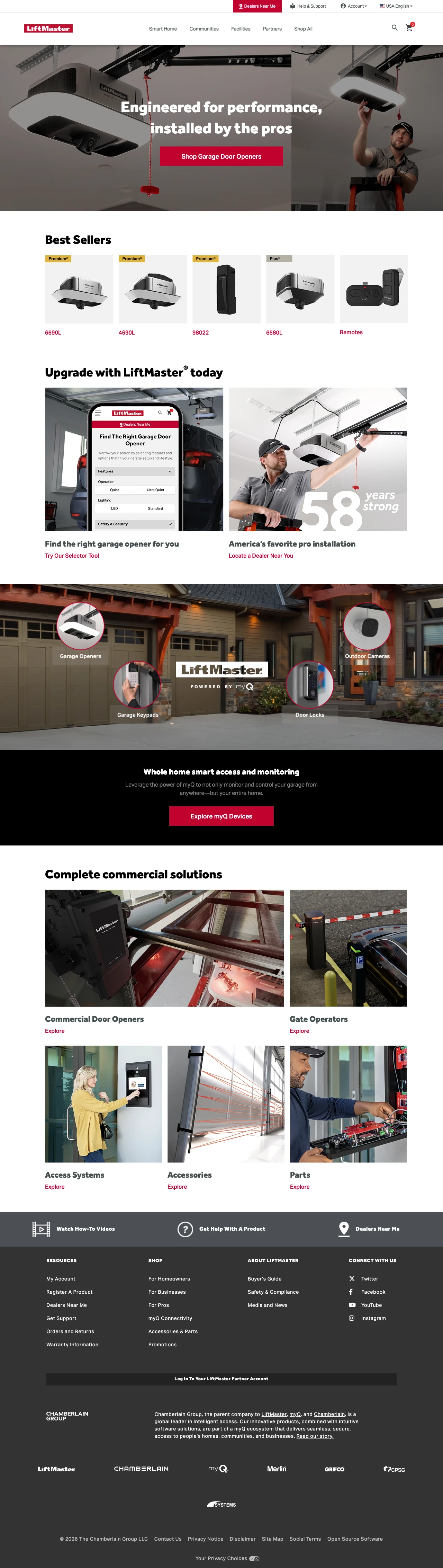
No phone number visible in the hero. For a brand that's running paid traffic on 'garage door opener repair' keywords, the absence of a call CTA breaks emergency intent entirely
'America's favorite pro installation' section links to a 'Locate a Dealer Near You' ZIP form, which is a two-click dead-end from the search result, bounce-driving for panic-state visitors
Hero headline 'Engineered for performance, installed by the pros' is manufacturer copy about engineering, not homeowner copy about getting the door fixed today
Commercial-door and gate-operator sections dilute the homeowner's consideration set, B2B content on a consumer-traffic page costs attention with no conversion payoff
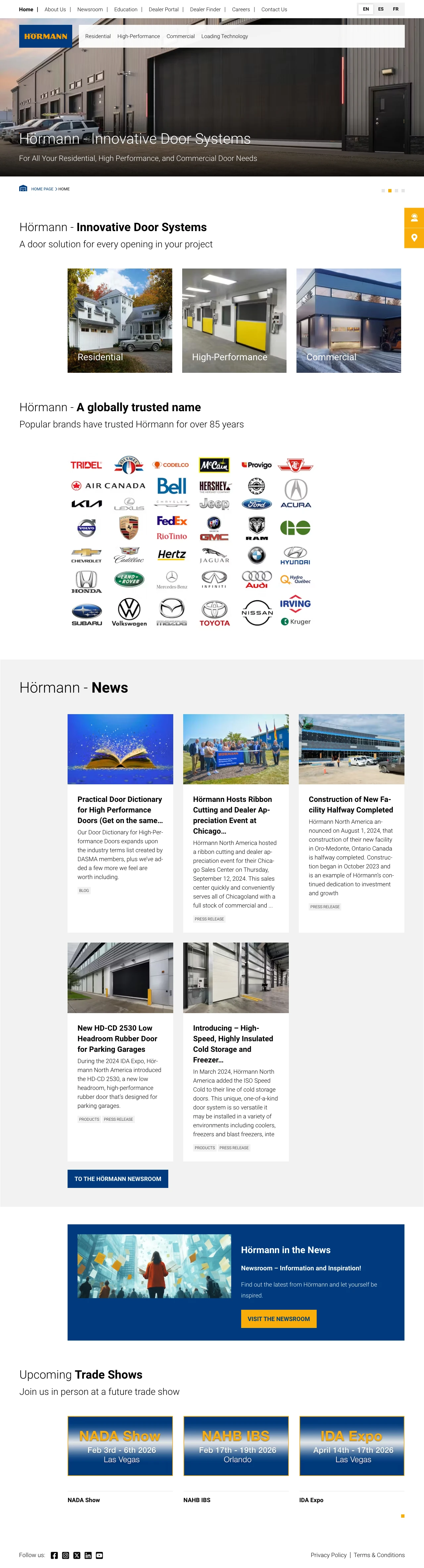
Press-release blocks ('Ribbon Cutting', 'New HD-CD 2530 Low Headroom Rubber Door', 'ISO Speed Cold') dominate the homepage below the hero, this is investor-relations content occupying prime consumer real estate
Dealer-finder CTA is buried between A.I. Assistant and Find a Dealer blocks, neither offers a phone number or a specific product page
The umlaut-heavy copy ('Hörmann AI Assistant', 'Practical Door Dictionary') and soft-hyphen formatting reveal an imported German CMS that treats the US market as a translation layer rather than a dedicated consumer experience
Tradeshow logos (NADA, NAHB IBS, IDA Expo) below the fold are industry-conference signals that mean nothing to homeowners and take the space where customer reviews would earn trust
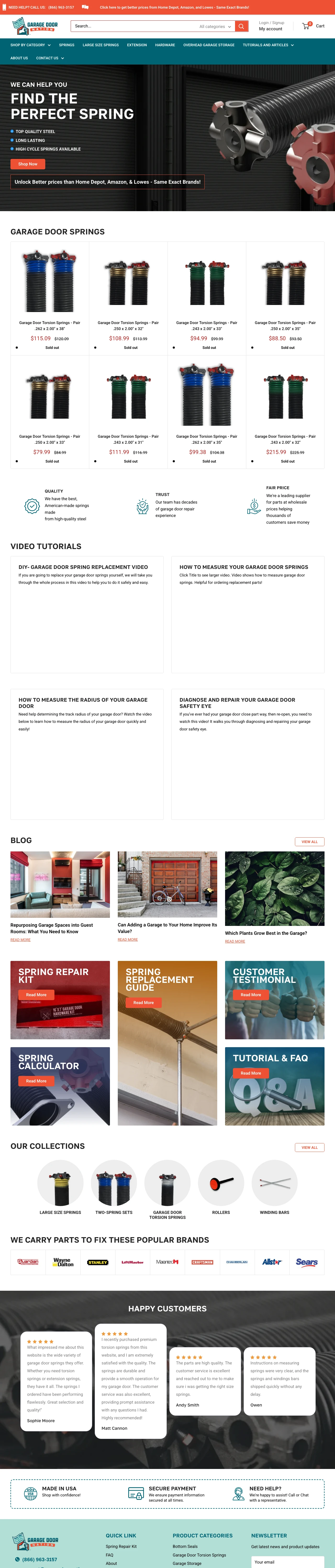
Homeowner searching 'garage door spring repair near me' sees a parts catalog and a 1-800 number, no local technician, no service scheduling, no emergency response
The page assumes the visitor is a DIYer who knows the difference between .243 and .262 springs, for the 90% of traffic that doesn't, the SKU list is unparseable and bounces
Every spring SKU visible in the hero reads 'Sold out', which is the single worst trust signal an ecommerce page can show above the fold
No service operator partnerships, no 'can't DIY? here's a local pro' fallback, the page has no conversion path for the service-intent visitor
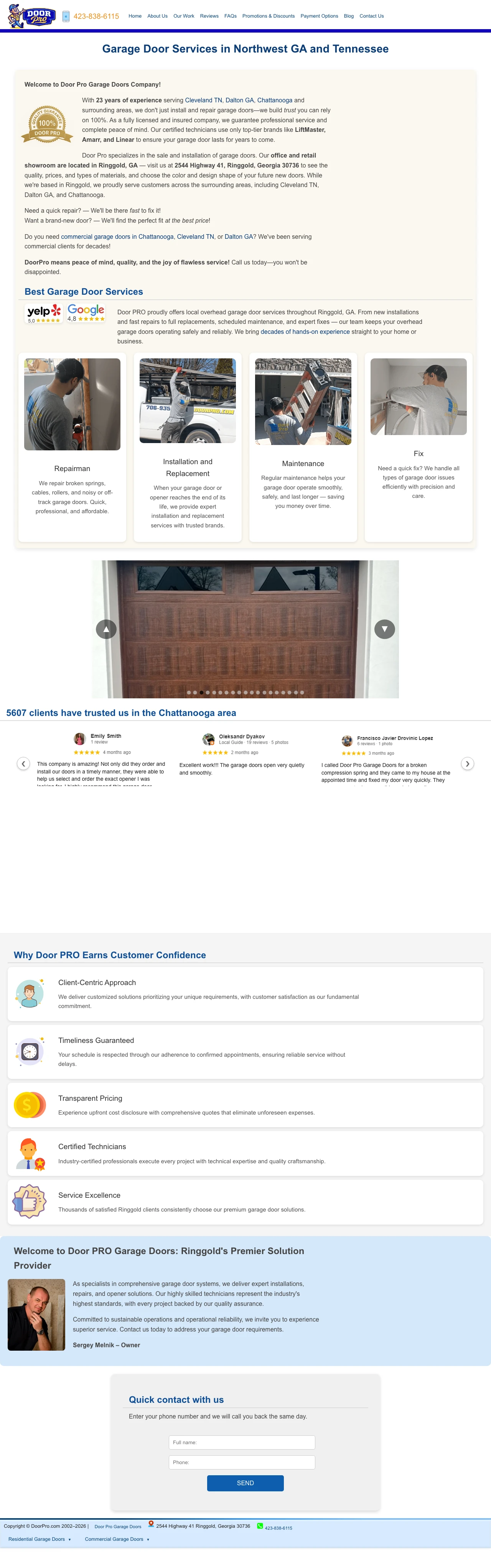
No visible form in the hero, no phone button, no booking widget, the entire above-the-fold is introductory prose with embedded text links to city pages
Phone number '423-838-6115' appears only in the footer, buried under a copyright notice and an address block
Photo gallery is a raw image grid without captions, lightbox, or before/after labels, the work exists but the presentation wastes it
'Timeliness Guaranteed', 'Transparent Pricing', 'Certified Technicians' boilerplate cards read as filler since the actual pricing table, appointment calendar, and certification numbers aren't linked or shown
'Quick contact with us' form at the bottom ('Enter your phone number and we will call you back the same day') is the page's only form, and it appears below 18 project photos and a testimonial carousel
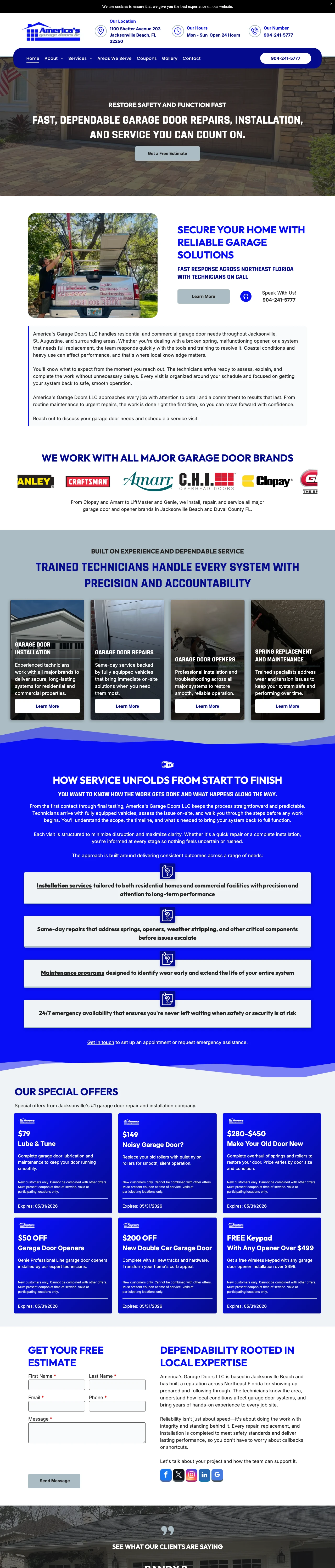
Hero is four competing elements (logo, phone icon, location icon, clock icon, phone icon again) at near-equal visual weight, no clear priority for where the visitor looks first
Headline 'Restore Safety and Function Fast' is generic safety-language that doesn't name the specific service the visitor searched for, message-match is weak for any keyword more specific than 'garage door service'
Hero CTA is 'Get a Free Estimate' linking to a contact-us page, no inline form, no phone button, no booking widget above the fold
Body copy is stock-vendor prose ('Every visit is organized around your schedule and focused on getting your system back to safe, smooth operation') that reads as filler written by a site-builder template wizard rather than the business owner
Photo decoration is silhouette icons and stock van shots, no technician headshots, no real project photos, no customer-review widgets
Sonic, Garage Doors Specialist, Aaron Overhead, and other local-service winners all feature a phone number rendered as large as or larger than the H1 in a contrasting color. For emergency traffic, the phone number IS the conversion. Hiding it behind a 'Request Quote' form or a secondary nav item ...
Sonic's 'Garage Service Prices' table shows 25+ services with actual dollar amounts, spring replacement, opener install, cable repair, while most competitors refuse to list any price. In a category defined by scam fear, transparent pricing is a moat. Visitors who see the numbers stop worrying abo...
Every garage door winner in our sample ends with a 'We Work With All Major Garage Door Brands' logo row: LiftMaster, Chamberlain, Amarr, Clopay, Genie, Linear, Raynor, Sommer, Stanley. These aren't endorsements, they're compatibility claims, but they signal 'we're legitimate' the way NATE or EPA ...
LiftMaster and Hörmann run paid traffic into their corporate homepages, which route the homeowner into a 'find a dealer' ZIP lookup and a product catalog. The visitor who searched 'garage door repair near me' wanted a phone number and a price. They got a product carousel and a dealer-finder form....
Winners put the phone number, the price range, and the local team photo in the hero. Losers either send paid repair-intent traffic to a manufacturer homepage (no phone, no service), run a parts-ecommerce store against a service keyword (wrong intent entirely), or build a local shop page that buries the phone number under 2000 words of text..