We analyzed 64 gym landing pages. Only 8 are worth stealing from.
We pulled 64 gym and studio pages that were paying for Google Ads clicks, and read them all. These 8 are the ones worth your time. Everything we found is on this page, free.

64 landing pages screened
From real gyms / fitness Google Ads campaigns in the US
8 winners curated
The landing pages actually worth stealing from
4 burning money
So you know exactly what to avoid

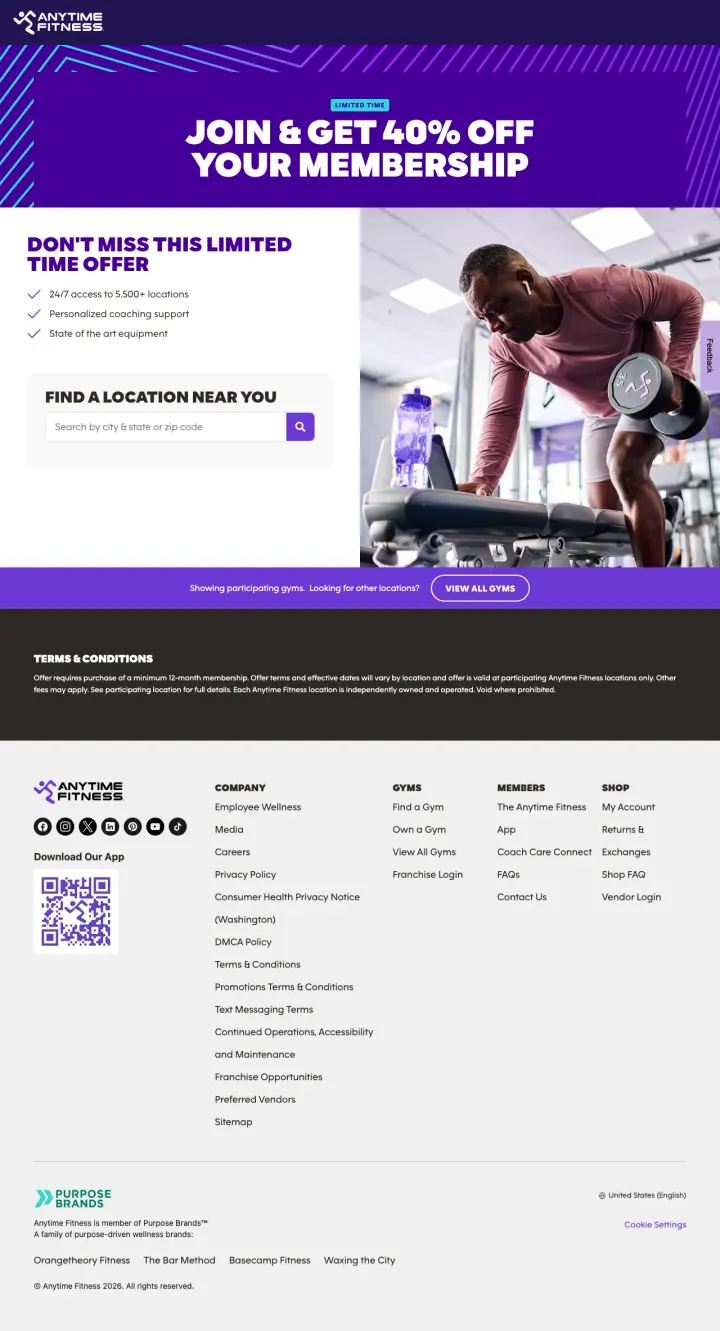
Anytime Fitness gives a page to every club, and the Durango one hands its whole first screen to a single discount with a limited-time flag over it. No lead form appears anywhere on it. The only box asks which town you are in, so the sale happens in the club and not on the page.
Show two CTAs side by side above the fold: one for 'Try Us Free' (low commitment, for browsers) and one for 'Join Now' (for ready buyers). One button catches the cautious visitor who needs to experience the gym first, the other catches the motivated visitor who just wants to sign up today.
- +
Three plans price the way out expensively price framingone afternoon
Two contract plans bill bi-weekly and the no-commitment plan bills monthly at a price that dwarfs both. Print yours the same way, because the expensive way out is what makes the long deal look like the bargain instead of the trap.
- +
Photos come from inside the real club made personalone afternoon
They walked round the Durango club with a camera and dropped the spin class and the equipment floor in among the polished brand photography. Do the same on a quiet morning, because a stock gym could be anywhere and yours is the one they have to drive to.
- +
Four links jump straight past the sales pitch layouteasy
JUMP TOUnder the hero they point at Equipment & Amenities, Membership Plans, Gym Announcements and Why Anytime Fitness. Someone comparing three gyms only wants your prices, so hand them a link to that section instead of the paragraphs every gym site already has.
- ✕
Third link offers a way to decide nothing focuseasy
Explore MembershipsTRY US FREE and JOIN NOW leave a visitor with one decision to make, and then Explore Memberships sits underneath and offers a way to make neither. If two buttons are already doing the job on your hero, delete the quiet link under them.
- ✕
Address sits at the same size as everything local proofeasy
Street address and phone number both land in the first screen, but at body size while the headline and two buttons take all the weight. Location is most of the reason anyone picks a gym, so make your address the second thing they see.

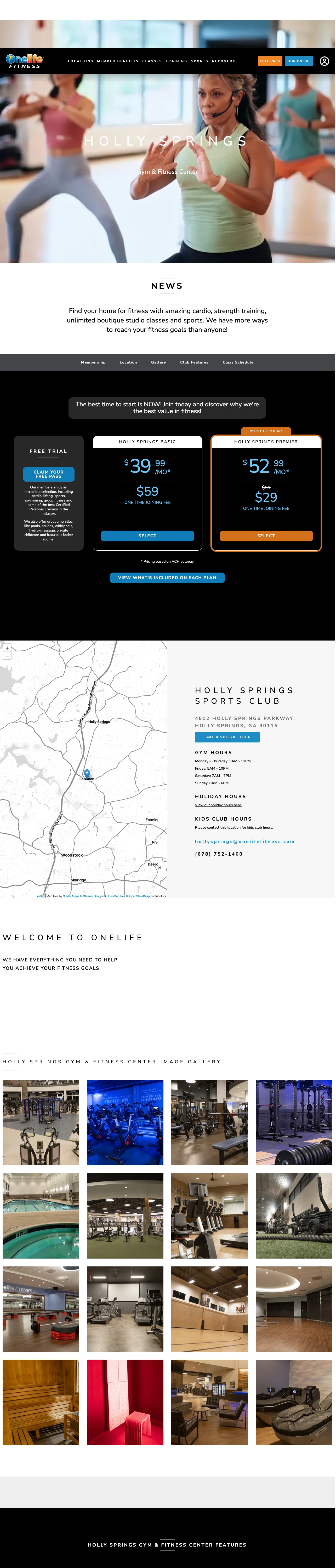
Onelife's page answers the which-tier-do-I-pick question with a ticked table, and it does that faster than any paragraph could. A free pass button rides along in the nav from the moment the page loads. The phone number does not turn up until you have scrolled a very long way, which is odd for a club that wants you to walk through its door.
Create a comparison table showing exactly what each membership tier includes with checkmarks and X marks. Onelife's Basic vs Premier table makes the upsell from $34.99 to $47.99 feel obvious because you can see 8 additional perks (HydroMassage, tanning, towel service, body composition analysis, Red Light Therapy) for $13 more per month. The visual comparison does the selling without any copy.
- +
Joining fee struck out on the pushed tier price cuteasy
One Time Joining FeeBasic asks a joining fee. Premier shows that same fee with a line through it and a smaller one underneath, sitting below the MOST POPULAR ribbon. Cross out the fee on the tier you want sold, and keep 'one time' beside it so nobody thinks it repeats.
- +
Tick rows show what the step up buys layoutone afternoon
View what's included on each planLook down the two columns and Premier carries ticks Basic does not: monthly body composition analysis, towel service, HydroMassage, Red Light Therapy and tanning. Build the same table for your tiers, and do not shut it behind a button the way Onelife does.
- +
Virtual tour opens before anyone asks a name answers a worrymedium
Take a Virtual TourYou get a walk round the real club in your browser. If someone is nervous about walking into your gym, a row of photos will not settle it the way a walk round will. Onelife puts theirs beside the map, so put yours where people will find it.
- ✕
First screen names no price and no offer no offereasy
Gym & Fitness CenterYou get the club name in spread-out capitals, that subhead, and a video of a class behind it. No price, no rating, no phone number. The only thing to press is FREE PASS up in the nav. Paying for the click means saying the offer in the first screen.
- ✕
Six nav links lead off the paid page exit routesone afternoon
Locations, Member Benefits, Classes, Training, Sports and Recovery run across the top before you reach the two buttons that matter. Each is a way off the page you paid to land on. When a page serves one ad, cut it to your logo and your free pass button.
- ✕
Class timetable runs seven columns wide too much detaileasy
Four dropdowns sit above it and a Print button beside it. That is a page for members who already pay you, dropped into a page for people who do not. Somebody deciding whether to join wants your Saturday yoga slot. A week of trainer names does not answer that.
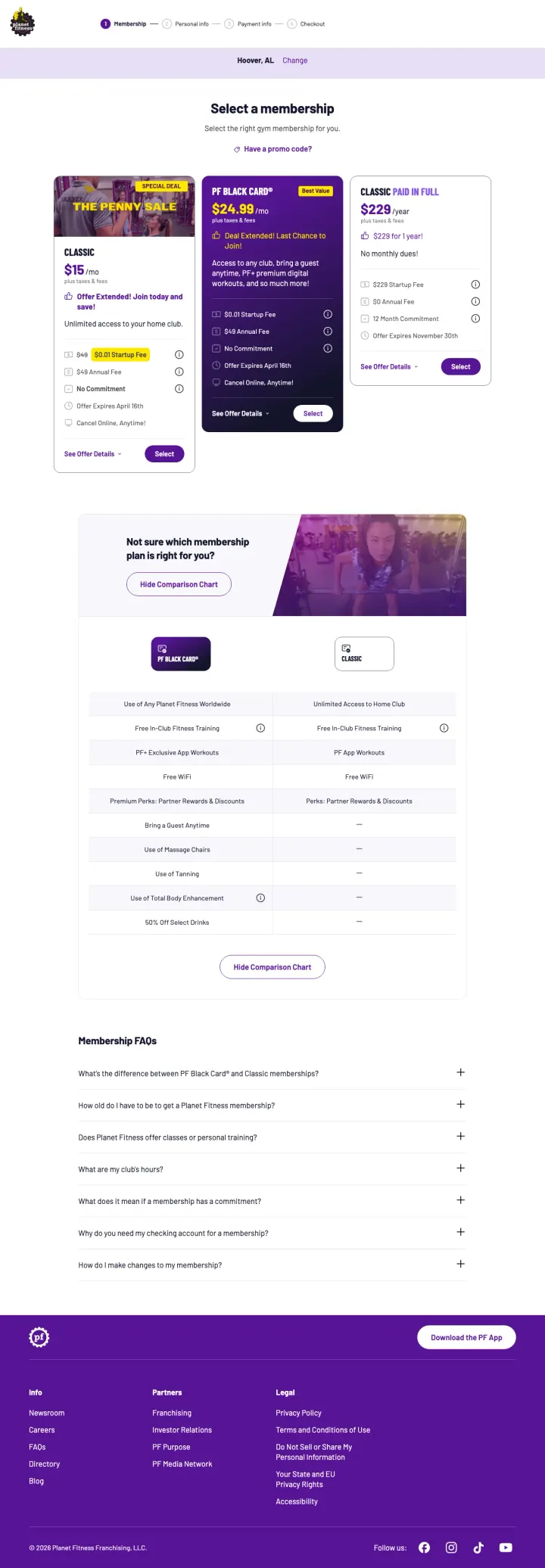
Planet Fitness skips the pitch entirely. The ad drops you inside the join flow at step one, in front of plan cards that already carry the monthly price, the startup fee and a deal ribbon. There is nothing on that screen to ask a question with: you pick a plan or you leave.
Show all membership tiers side by side with a 'Not sure which plan is right for you?' comparison chart below. Planet Fitness displays Classic ($15/mo), PF Black Card ($24.99/mo), and Classic Paid in Full ($229/year) with checkmarks showing exactly what each tier includes. The comparison chart below lets indecisive visitors see the feature differences without scrolling between cards.
- +
Three plans compare without a single scroll prices up frontone afternoon
Deal Extended! Last Chance to Join!Classic, PF Black Card and Classic Paid in Full sit side by side with prices printed and a Select button on each. The middle card gets the dark purple treatment and the badge, and that is the plan they want you to take. Mark your best-margin plan the same way.
- +
Cancellation terms print beside the price answers a worryeasy
Cancel Online, Anytime!The number one worry about joining a gym is the contract you cannot get out of, so 'No Commitment' and this line sit as features on the Black Card rather than in the fine print. If you let people cancel online, say it next to the price.
- +
Comparison chart names perks people picture makes it easierone afternoon
Not sure which membership plan is right for you?Someone stuck between your cheaper plan and your dearer one does not pick the cheaper, they pick neither. This chart lists massage chairs, tanning and guest privileges against dashes. Name the perks that justify your price gap instead of asking anyone to hold both cards in their head.
- ✕
Annual price never divides into a monthly one missing mathsone line
$229 for 1 year!Paid in Full prints a yearly price and leaves the visitor to work out the rest. The monthly equivalent is the number that wins the comparison. Print it under your annual price and the saving does the arguing for you.
- ✕
Both cards flag an offer running out urgency everywhereeasy
Offer Extended! Join today and save!Classic carries a limited-time line and the Black Card carries its own Deal Extended! Last Chance to Join!, so when both are a last chance neither one is. Put the deadline on one plan only, or your visitor learns to read straight past the badge.
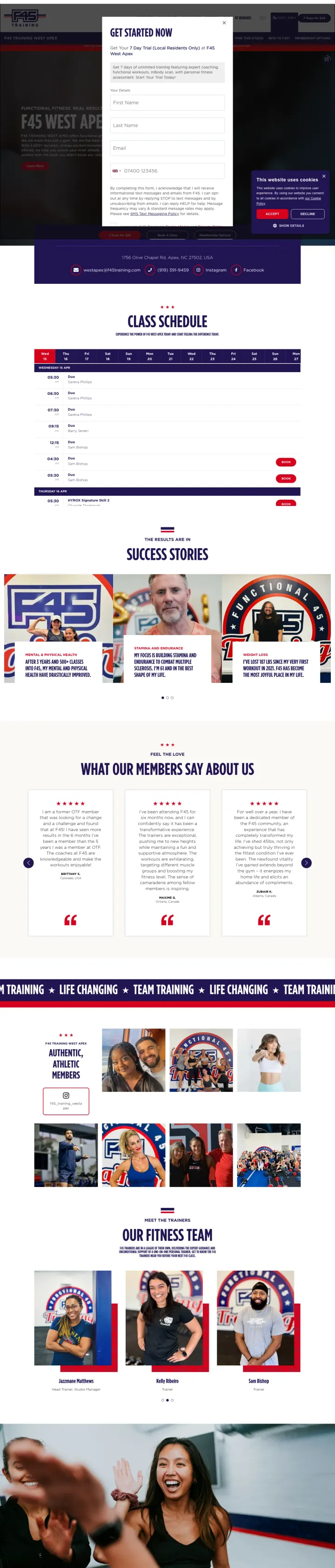
Most studio pages make you scroll before they ask you anything. The West Apex page opens with the sign-up box instead, and it wants a name and a way to reach you, nothing more. Their footer prints an award ranking and a members' rating, the sort of claim a stranger can go and verify.
Build a single page that combines your class schedule, member success stories, and trainer team photos. F45 West Apex puts all three conversion elements on one page so the visitor can answer 'when can I go?', 'does it work?', and 'who will train me?' without navigating away.
- +
Form asks four things and stops makes it easiereasy
7 Days for $29First name, last name, email, phone, before you have read a word of the page. The button behind it prices the trial. Count the fields on your own form. Everything past four is one more reason to leave it till later.
- +
Real timetable sits on the page itself answers a worrymedium
Book A ClassThe times are there with no login and no separate booking site. Put your real timetable up instead of a link to one, because nobody joins a gym they are not sure they can get to.
- +
Member quotes carry a name underneath reviewshard to earn
WHAT OUR MEMBERS SAY ABOUT USEvery quote is signed, and that is what makes a stranger believe it. Ask ten members for two lines each and put their names beside the words.
- ✕
Transformation photos never name the studio borrowed proofone afternoon
Nothing on them ties the results to Apex. Local is the one thing you can beat the brand at. Shoot your own, then put the first name and the town under each.
- ✕
Coach portraits skip every qualification missing credentialseasy
Faces and a job title, and not one certification between them, so print each coach's qualification under the name before your customer books a personal trainer instead.
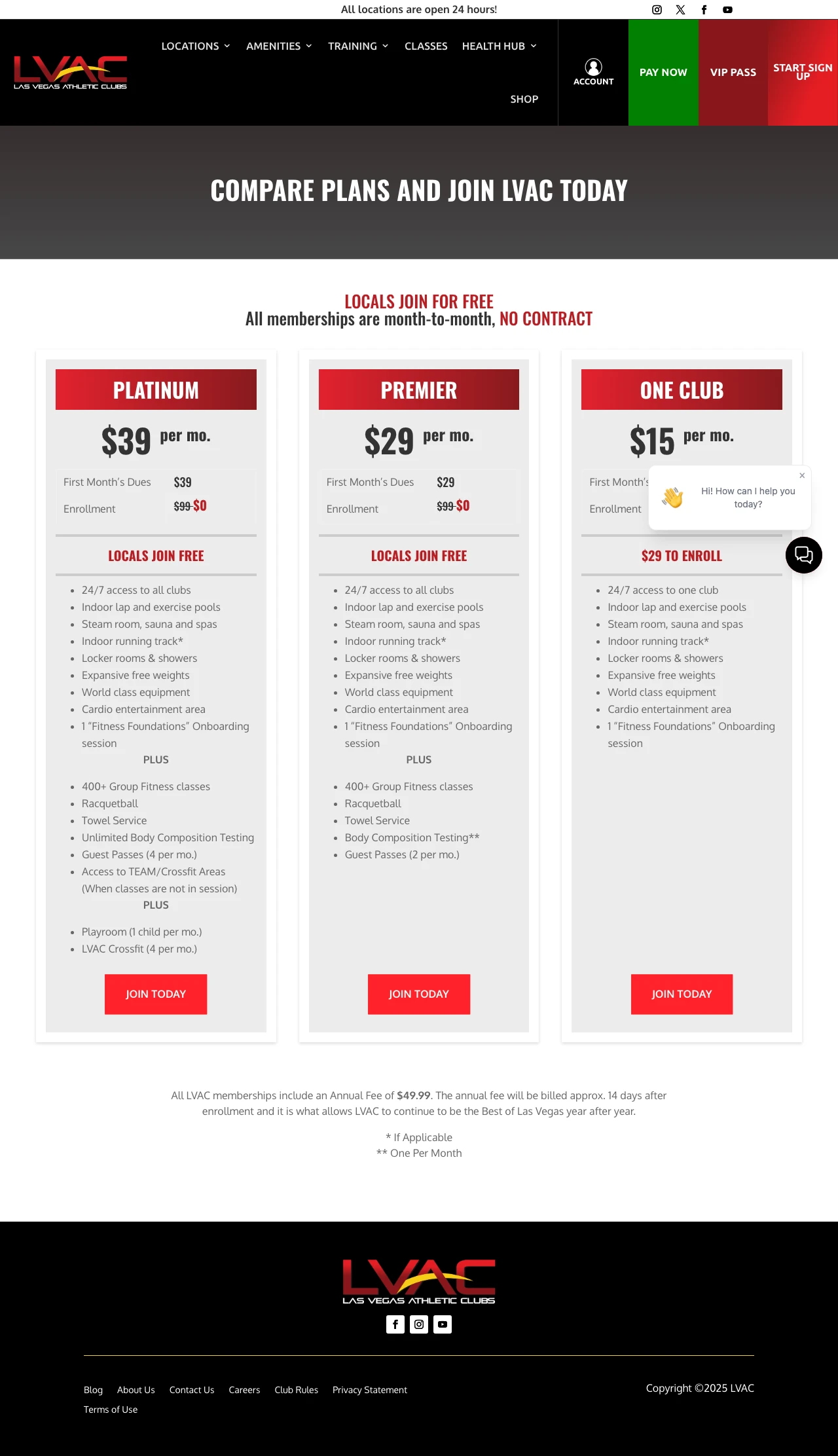
Everything LVAC wants a visitor to decide sits on the first screen, plans and prices together, with the enrolment fee crossed out. The fear of getting stuck in a contract is answered right in the subhead, above the money, where the nervous buyer meets it first. No form, no phone number - if the plan cards do not close it, nothing will.
Put all three membership tiers on one page with stacked checklists under each price. LVAC shows Platinum ($39), Premier ($29), and One Club ($15) side by side with the same seven core amenities under each (24/7 access, pools, steam/sauna/spa, running track, lockers, free weights, equipment, cardio area), then adds a 'PLUS' block below that listing the extras each tier unlocks (400+ group fitness, racquetball, towel service, playroom, CrossFit). The visitor can see exactly what they gain by stepping up a tier without reading a comparison chart.
- +
Enrollment fee crossed out beside the zero the offera pricing call
LOCALS JOIN FREEFree only feels like a deal when the visitor sees what free replaced. LVAC prints the joining fee, strikes it through and sets the zero next to it on the two dearer tiers, so the saving arrives as a number instead of a word. Cross out your own.
- +
Contract fear answered above the money answers a worryeasy
All memberships are month-to-month, NO CONTRACTEverybody who has ever tried to cancel a gym knows the trap, so that fear is in the room before your prices are. LVAC settles it in the subhead, in capitals. If your memberships really are month to month, say it there. The footer is where promises go to die.
- +
Annual fee named with its billing date no hidden feeseasy
The annual fee will be billed approx. 14 days after enrollmentA charge somebody meets later is the one that comes back as a refund request. LVAC prints the annual fee under the pricing table and says when it lands. Whatever you bill on top of the monthly price, put it where they pick the plan.
- ✕
Cheapest tier charges what the others waive price logica pricing call
$29 TO ENROLLYour cheapest plan should be the easiest one to say yes to. Here the entry tier is the only one still charging to enroll while the two dearer plans waive it, so the visitor counting the pennies pays more to walk in the door.
- ✕
Every tier button lands on its own signup checkout pathneeds a developer
Each plan sends its own Join Today button to its own signup URL, tidy for your reporting and awkward for the buyer who changes their mind at the checkout. Let people switch tier inside the signup, and carry the plan in the URL if you want the split.
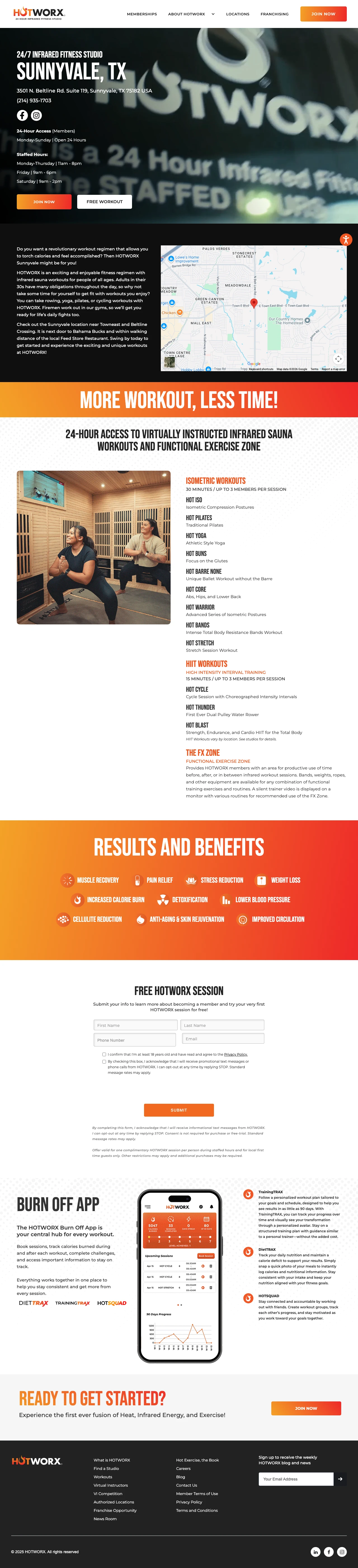
Infrared sauna workouts are a format most people have never tried, so the HOTWORX studio page opens like a shop window: the name, the address, the hours and a phone number at a size you can actually read. Nobody else in this file bothers with that last part, and it costs nothing to copy.
If you run a niche fitness format (infrared, boxing, pilates, cycling), list every class by its exact name and duration on the location page instead of using generic category labels. HOTWORX Sunnyvale lists nine 30-minute isometric classes (Hot Iso, Hot Pilates, Hot Yoga, Hot Buns, Hot Barre None, Hot Core, Hot Warrior, Hot Bands, Hot Stretch) plus three 15-minute HIIT classes (Hot Cycle, Hot Thunder, Hot Blast) with one-line descriptions of each. A visitor can skim the format catalog and self-select which class fits their current goal without asking a staff member.
- +
Session cap reads as private training price framingeasy
30 MINUTES / UP TO 3 MEMBERS PER SESSIONThree people in a session sounds like nearly private coaching rather than a room that ran out of space. That is the whole trick. Put your own cap on the same line as the session length, and the small number carries your price for you.
- +
Ten labelled tiles picture the outcome answers doubtsone afternoon
RESULTS AND BENEFITSYou cannot buy a workout you cannot picture. Muscle Recovery, Pain Relief, Weight Loss, Detoxification and six more do the picturing. If your format needs explaining, name the results instead and let people find their own reason to try it.
- +
Directions run off local landmarks local detaileasy
It is next door to Bahama Bucks and within walking distance of the local Feed Store Restaurant.A street address tells you nothing until you can place it. Next door to Bahama Bucks, walking distance from the Feed Store Restaurant, near Towneast and Beltline Crossing. That is the map people in Sunnyvale already carry. Name the shops on your corner.
- ✕
Nothing on here says what members think no social proofhard to earn
The first screen has the name, the address, the phone, the hours and two buttons, and no star. A membership is a bill that keeps coming, and other people in your town settle it. Put your Google score and the review count next to the join button.
- ✕
Free offer loses the hero to a checkout wrong emphasiseasy
Two buttons sit in the hero and the loud orange one, JOIN NOW, drops you into a membership checkout. FREE WORKOUT, the only offer this page names, gets the outline and second place. Almost nobody clicking a gym ad is ready to sign up today.
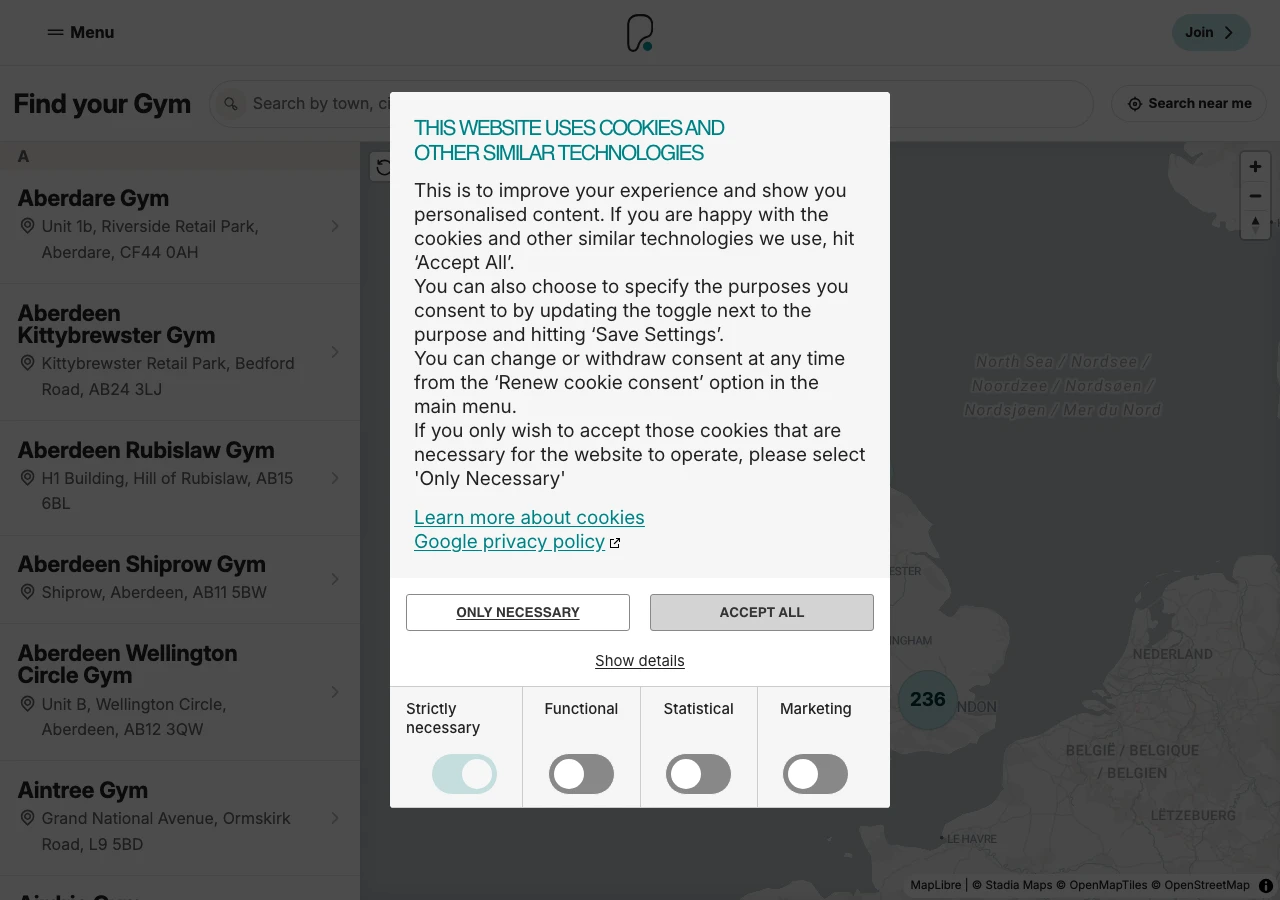
PureGym is the big UK budget chain, and a search for any single branch drops you on the same national finder. The first screen is a search box, a map and a bare Join button with no price or trial beside it. What rescues the page sits further down, where every branch tile prints its own monthly price rather than hiding it behind a click.
When you run a multi-location locator, display each location's starting monthly price and joining fee directly on the listing, not locked behind a click into the location page. PureGym shows 'Starting at £18.99 per month + £10 joining fee' on every gym tile, with promotional pricing like 'Starting at £32.99 £23.99 per month for your first month' on locations running intro deals. A visitor comparing three or four nearby PureGyms can triangulate the best price without opening four browser tabs.
- +
Branch rate belongs on the listing itself price up frontone afternoon
Starting at £18.99 per month + £10 joining feeNobody should open four tabs to work out which gym is cheapest. If your locations price differently, put the number on the listing. Bury it behind a click and your comparison shopper goes back to the search results to check a competitor.
- +
Previous price sits beside the new one offer framingeasy
Starting at £32.99 £23.99 per month for your first month + £10 joining feeOld price, new price, same line. The cut reads as real instead of a bait price. If you run an intro rate, show what it was. Drop the old number and the new one just looks like your normal price.
- +
Letter headings and near-me serve both habits two ways inone afternoon
Search near meSome people browse for their town. Some type the gym name. Letter headings run down the list and a near-me button sits above it, so both get served. Pick one and you lose the half who wanted the other.
- ✕
Locator opens on the whole national network too much at oncea dev job
Showing all gymsYou land with no filter for where you are. Someone in Leeds scrolls past Aberdare, Aberdeen and Ashford before they reach their own market. Sort your locator by the visitor's city first. Let them widen out from there.
- ✕
Joining fee moves without any explanation raises a questioneasy
Starting at £23.99 per month + £25 joining feeOne branch charges nothing to join. The next one down the list charges a fee. Nothing says what makes the difference, so you have handed your visitor a fresh question at the moment they were about to decide. Put one line next to the fee saying what moves it.
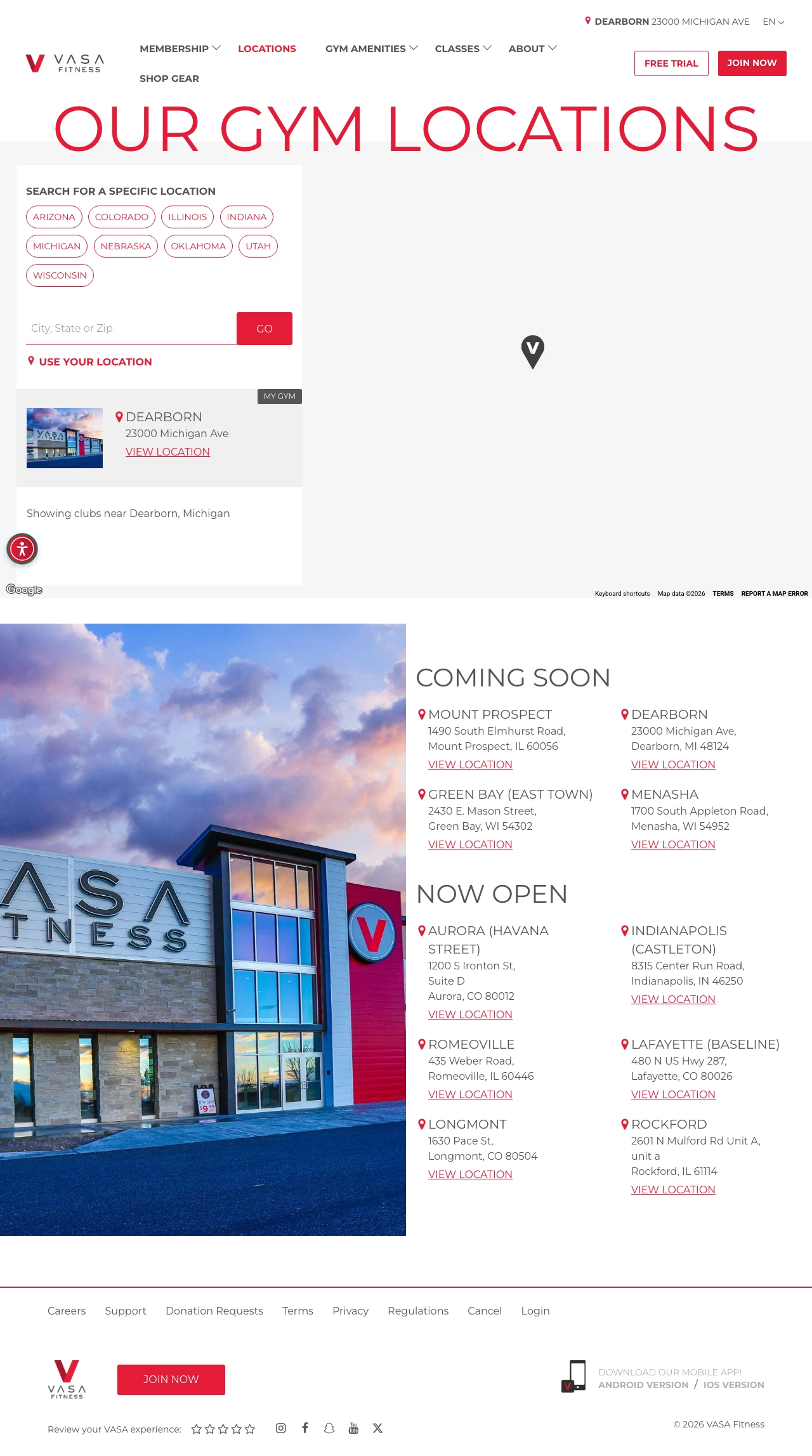
Some of the clubs on this VASA locator are not open yet, and the page says which ones rather than letting you find out after the click. That saves the visitor a wasted trip and saves VASA a wasted click. The header keeps a free trial and a join button in view the whole way down, and that is the only selling the page does.
If your franchise has openings in the pipeline, segregate 'Now Open' and 'Coming Soon' into two explicitly labeled sections on the locator. VASA runs both at once (Aurora Havana Street, Indianapolis Castleton, Romeoville, Lafayette Baseline, Longmont, and Rockford under 'Now Open'; Mount Prospect, Dearborn, Green Bay, and Menasha under 'Coming Soon'). A visitor can tell at a glance whether the gym they want is actually available this week, which kills the post-click disappointment that happens when a paid ad routes to a pre-launch location with no open date.
- +
Open clubs split from the ones still building answers a worryeasy
Now OpenYour visitor can see at a glance whether the gym they want is open this week. VASA runs six clubs under Now Open and four under Coming Soon on the same page, so a paid click never lands on a location that will not open for months.
- +
State chips cut the list before any typing makes it easierone afternoon
SEARCH FOR A SPECIFIC LOCATIONSomeone comparing gyms has not picked a city yet, and asking for a zip code stops them dead. Nine chips sit above the search box, Arizona through Wisconsin, and one tap cuts the national list down to their own state.
- +
Locator tile gives city, street and button one clear actioneasy
VIEW LOCATIONThat is the lot. No phone number, no amenities list, no pricing teaser, so your locator does one job and the selling happens on the location page, where they have already picked a gym.
- ✕
Pre-launch tile hides its opening date wrong promiseone afternoon
COMING SOONClick the Dearborn tile marked Coming Soon and you land on the same View Location page as an open club. No date sits anywhere on that tile, which is the one thing that visitor came to find out. Give your pre-launch sites their own page with a date.
- ✕
Missing classes surface only after the click surprise after clickeasy
Group Fitness Classes Not Available in DearbornNobody learns that Dearborn has no group fitness until a modal tells them. If a location of yours is missing the thing people came for, say so on the tile. A pop-up two steps later has already cost you the visit.
What the winners keep doing
Wildcards
Pages that break the playbook in interesting ways
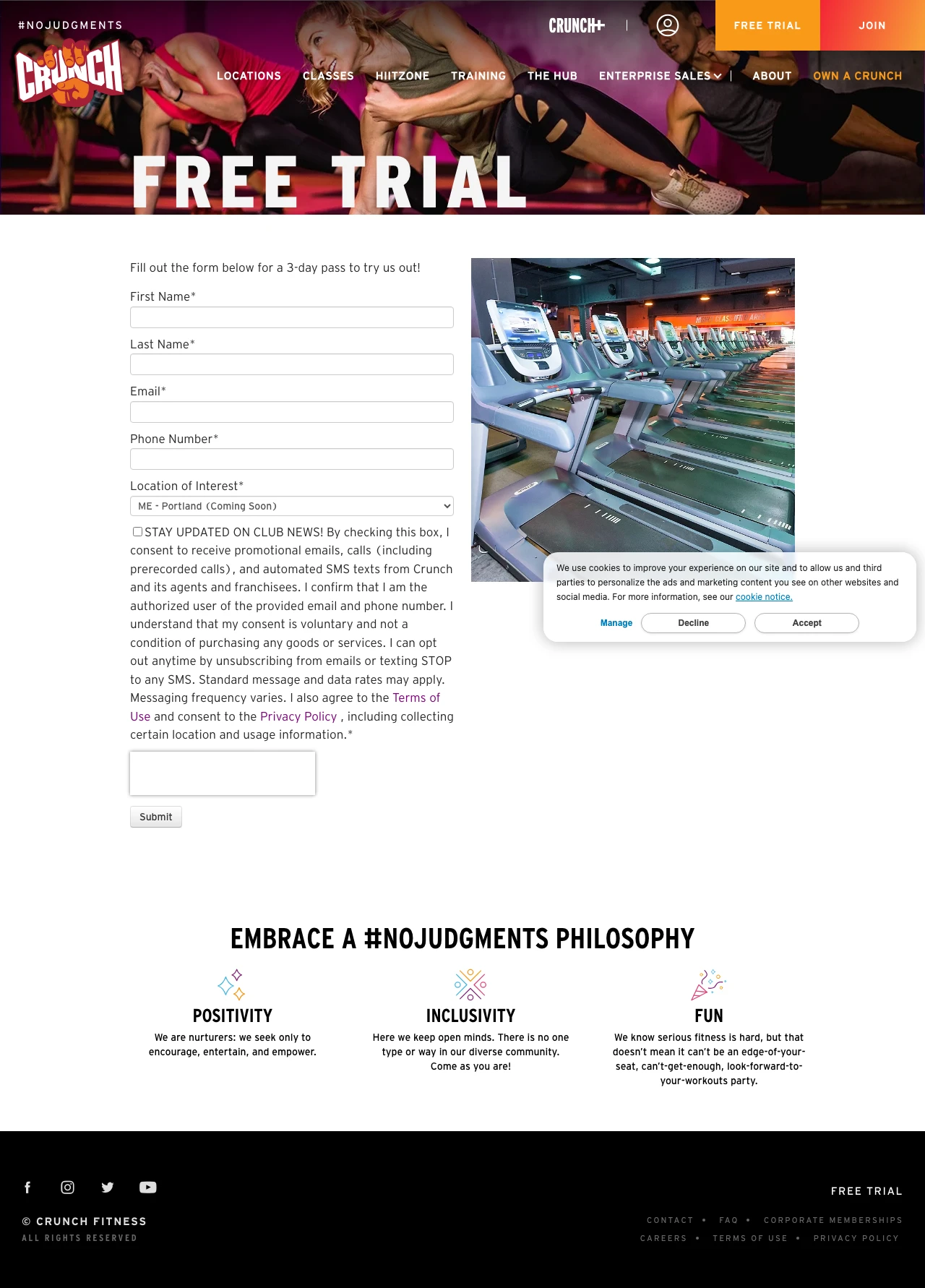
Build a dedicated free-trial page on a separate subdomain that contains nothing except the form and your brand promise. Crunch strips away pricing, facility tours, testimonials, and class schedules entirely. The page bets that someone who searched 'free pass gym' has already decided to try a gym - they just need the form. This only works for brands with recognition; an unknown gym needs to show what the visitor is signing up to try.
- made personal
The form asks only for first name, last name, email, phone and location. No fitness goals, no 'how did you hear about us', no demographic questions. Every extra box is another reason to give up halfway, and Crunch would rather have the lead than the data they can ask for later
- answers doubts
The '#NoJudgments Philosophy' section below the form (Positivity, Inclusivity, Fun) directly addresses the gym intimidation objection without showing a single photo of muscular people or intense workouts - it reframes the gym as a welcoming space rather than a performance arena
- fewer steps
Using a HubSpot-hosted subdomain (info.crunch.com) separates the lead gen page from the main site, allowing the marketing team to A/B test forms and offers without touching the main website codebase
- wrong promise
The location dropdown lists 200+ locations including dozens marked 'Coming Soon' - a visitor who selects a 'Coming Soon' location has no gym to visit, wasting both their time and Crunch's ad spend on an impossible conversion
- looks off
No facility photos specific to any location - the single gym photo shows generic treadmill rows that could be any Crunch anywhere. A visitor choosing between Crunch and a local competitor gets zero visual evidence for this specific location
- looks off
The cookie overlay sits on the right side of the page on desktop, obscuring the gym photo and creating an immediate visual obstacle before the visitor even reads the headline
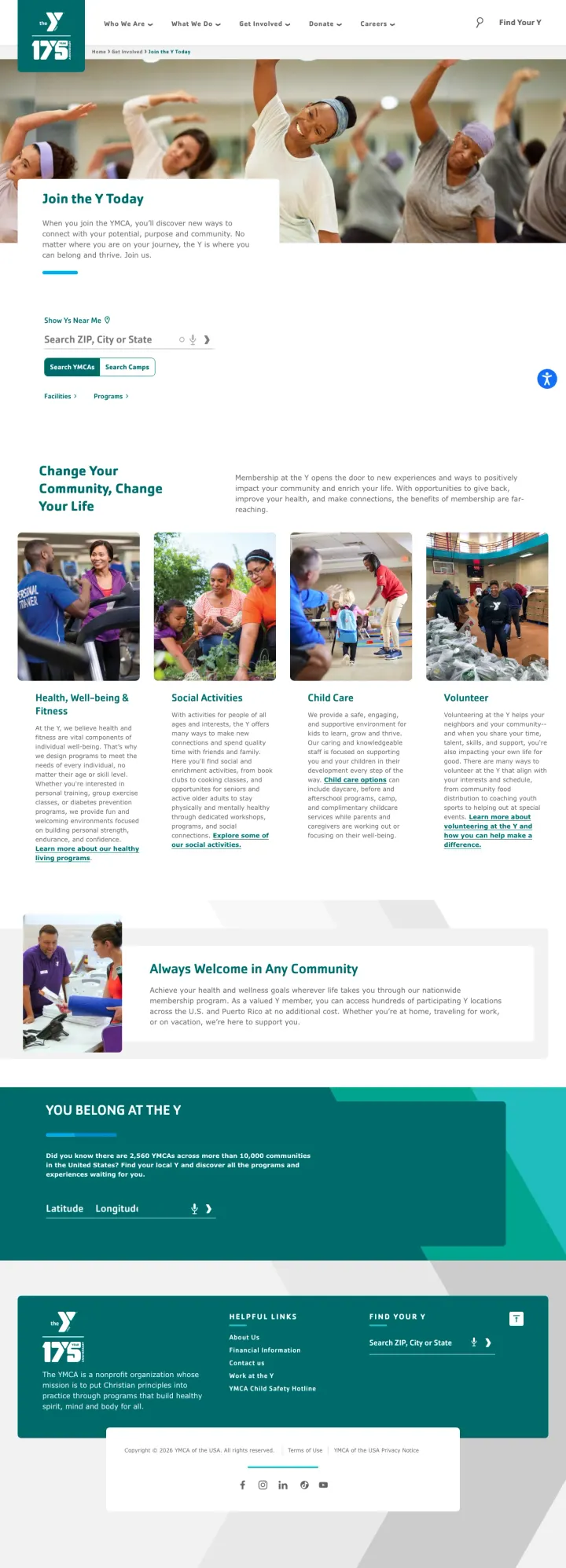
If you run ads targeting local keywords like 'Atlanta YMCA membership,' send that traffic to a location-specific page with local pricing and hours, not a national page that asks the visitor to search for their city again. The YMCA join page is a missed opportunity because the ad already knows where the visitor is.
- layout
'Change Your Community, Change Your Life' headline with four program pillars (Health/Fitness, Social Services, Child Care, Volunteers) communicates that the YMCA is more than a gym. For the community-minded visitor, this broader mission is the differentiator against commercial gyms
- answers doubts
The 'Always Welcome in Any Community' section with diverse, inclusive photography directly addresses the gym intimidation barrier. The photos show real people of all ages and fitness levels, not just athletes
- wrong promise
The ad targets 'atlanta ymca membership' and 'okc ymca membership' but the page is a national homepage with a ZIP code search box. The visitor who clicked an ad about Atlanta pricing now has to search for Atlanta again, which duplicates the work Google already did
- looks off
No pricing visible anywhere on the page. The visitor searching for 'YMCA membership deals' wants to see what it costs. The page shows mission statements and community photos but zero financial information
- wrong promise
The page has full site navigation with 'What We Do,' 'Who We Are,' 'Find Your Y,' 'Our Initiatives,' 'Newsroom,' and 'Support Us' tabs, giving the visitor 6+ exit paths before they find the join button
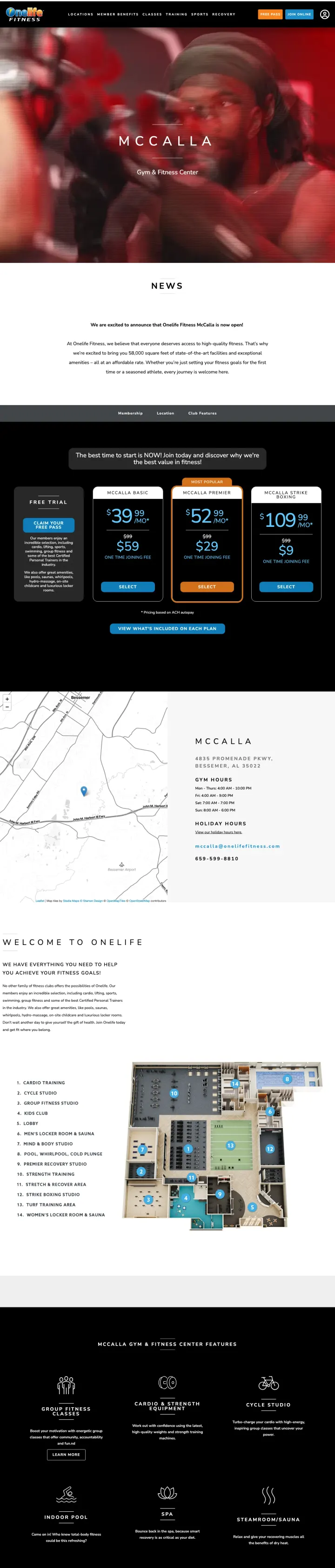
Why this breaks the rules: Big-box gym location pages default to photos of the equipment floor or the pool because those are the reassuring 'it's a real gym' signals. Onelife McCalla opens with a dark Strike Studio boxing hero (gloves, heavy bags, trainers holding pads for a member in action) and puts the general gym floor second. This reframes a new location launch as a boutique studio opening, which works because the McCalla market already has cheaper commodity gyms but no premium combat-sports destination.
- made personal
Boxing-specific hero photography with a named studio brand ('Strike Studio') turns a generic gym location opening into a studio launch with its own visual identity, justifying the $109/month premium tier
- made personal
Three-tier pricing visible without scrolling ($39 Basic, $52 Standard, $109 Premium) with 'Now Open' framing gives the new-location visitor a complete pricing decision on the first screen instead of forcing them into a form for 'learn more'
- answers doubts
Location address (4512 Holly Springs Parkway) with embedded map and business hours signals this is a real club ready to visit today, not a pre-sale page where the visitor is committing to an unopened facility
- wrong promise
No free pass or trial CTA above the fold even though the ad copy extension explicitly promises 'Get Your Free Pass to Explore It All'; the visitor has to hunt for the free pass offer after clicking an ad that led with exactly that offer
- missing proof
The Strike Studio hero positions this as a boxing-first location but the pricing tiers below use generic 'Basic/Standard/Premium' labels that don't tell the visitor whether Strike Studio access is included in a specific tier or upsold separately
- too much at once
The 'Now Open' banner has no opening-month context or grand-opening offer; without a date on it, 'new location' fades to 'just another gym' within a scroll
Compare the winners
The same questions asked of every winner, so you can find the page that matches the traffic you are already buying.
| Page | Entry path | Form fields | Named offer | Phone in the first screen | Standout move |
|---|---|---|---|---|---|
| #1Anytime Fitness | Club finder | No form | Yes | Yes | Single offer, whole screen |
| #2Onelife Fitness | Free pass button | No form | Yes | No | Ticked plan table |
| #3Planet Fitness | Straight into checkout | No form | Yes | No | Prices with the fees attached |
| #4F45 Training | Form on arrival | 4 | Yes | No | Short form, award badges |
| #5LVAC | Plan picker | No form | Yes | No | No contract, said early |
| #6HOTWORX | Call or free session | 4 | Yes | Yes | Readable phone in the hero |
| #7PureGym | Gym finder | No form | No | No | A price on every branch tile |
| #8VASA Fitness | Locations list | No form | Yes | No | Open and coming soon, split |
Read the keywords you are buying, then find the row that matches them. Somebody typing your gym name and your town is nearly signed up, so they want a price, a phone number and a way to start today. Somebody typing gyms near me is still shopping, and a clean locator with the prices on the tiles beats a hard sell. You paid the same for both clicks.
The copy bank
Lines lifted word for word from the pages above. We tell you whose page each came from, and one click copies it.
SEARCH FOR A SPECIFIC LOCATION
Find your Gym
Losers
4 pages burning ad spend with fundamental issues
Every click to these pages costs real money. We found join buttons that route to third-party domains, mismatched intent, weak CTAs, and messaging that ignores what the searcher actually typed. Here is what to avoid.
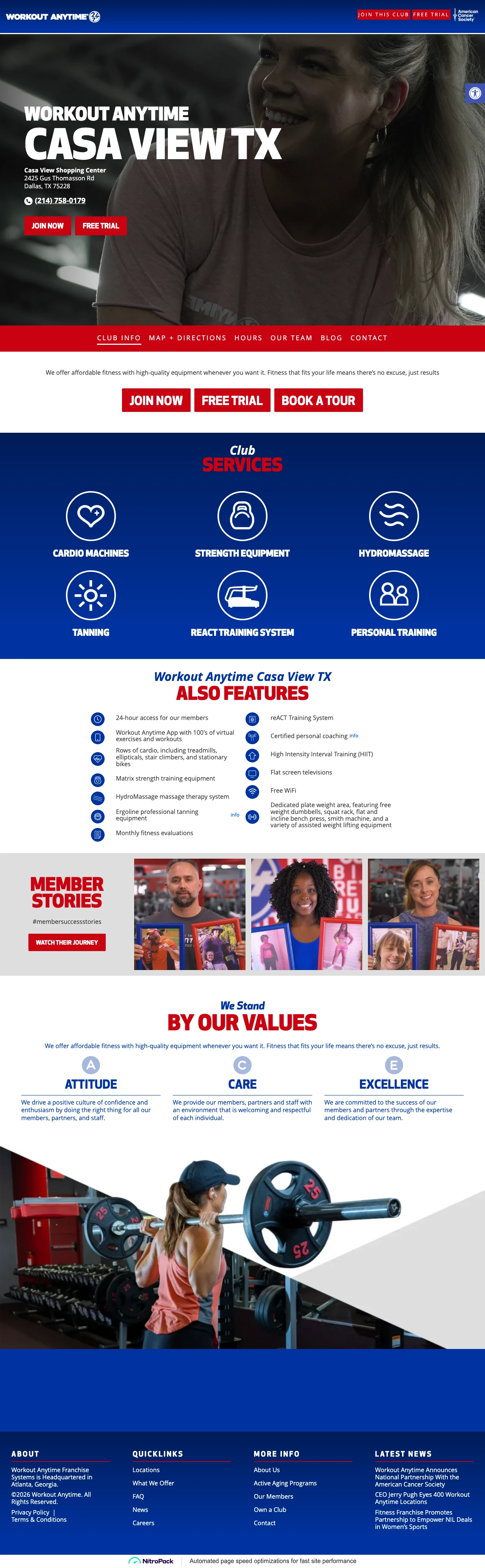
The location page for Workout Anytime Casa View opens with nothing but an address, a phone number, and three CTAs stacked in a row (Join Now, Free Trial, Book a Tour). The same three CTAs repeat a few scrolls later. There is no hero image, no pricing, no membership tiers, and no photos of the club. A visitor who clicked a local-intent ad lands on what reads like a placeholder directory entry and has to pick between three conversion paths without any reason to pick one over the other.
- wrong promise
Three equally weighted buttons (Join Now, Free Trial, Book a Tour) appear in a row with no visual priority, then repeat verbatim a few sections down, giving the visitor six identical-looking choices with zero guidance on which one matches their intent
- looks off
No hero imagery, no member photos, no pricing, and no membership tiers anywhere on the page; the club's only visual identity is a list of amenity text links (Cardio Machines, HydroMassage, Tanning, reACT) with broken image references
- no proof
The 'Join Now' button routes to a third-party domain (woat.org) rather than staying on workoutanytime.com, breaking brand trust at the exact moment the visitor is asked to hand over payment information
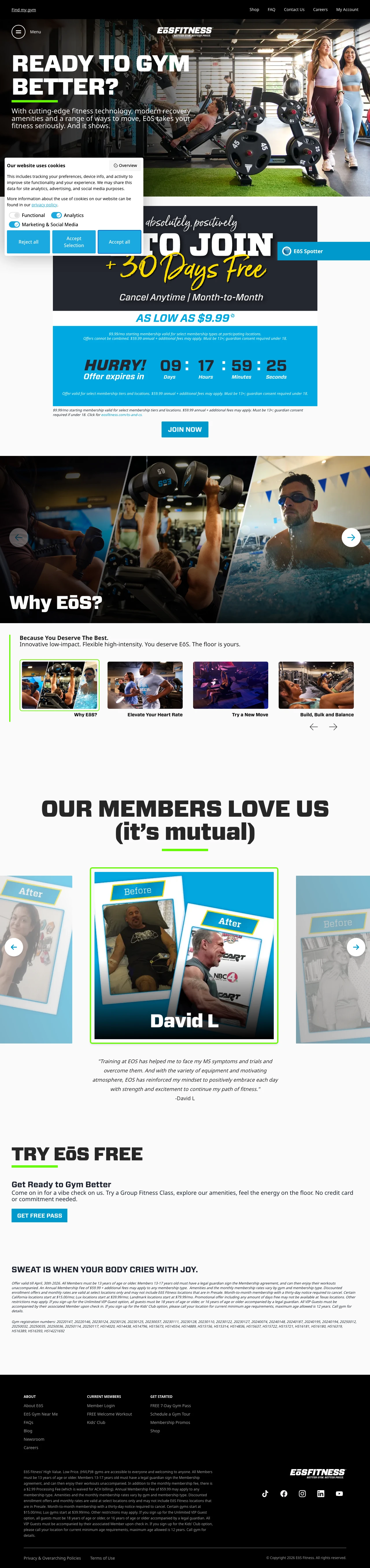
The URL path /monthlypo signals a monthly promotional offer. Below the hero, a graphic shows '$9.99/mo + 30 DAYS' and a disclaimer about select tiers and locations. But the hero itself is a generic 'READY TO GYM BETTER?' headline with a paragraph about 'cutting-edge fitness technology' and no pricing above the fold. A visitor who clicked a price-led ad scrolls past the hero to find the actual promo, which by then has to compete with small-print eligibility caveats instead of running the page.
- wrong promise
The hero says 'READY TO GYM BETTER?' with brand-positioning copy about technology and amenities, ignoring the $9.99 promo that the URL path and ad copy implied; the offer only appears as a small graphic below the hero
- wrong promise
The $9.99 price is immediately undermined by italic small print: 'valid for select membership tiers and locations. $59.99 annual + additional fees may apply' - the visitor who arrived for a $9.99 gym now has to decode whether their zip code qualifies
- wrong promise
Two 'Join Now' CTAs route to different destinations (joinnow.eosfitness.com via the promo graphic, eosfitness.com/join-now via the button below); having two sign-up paths on the same page with different URLs creates tracking and experience confusion
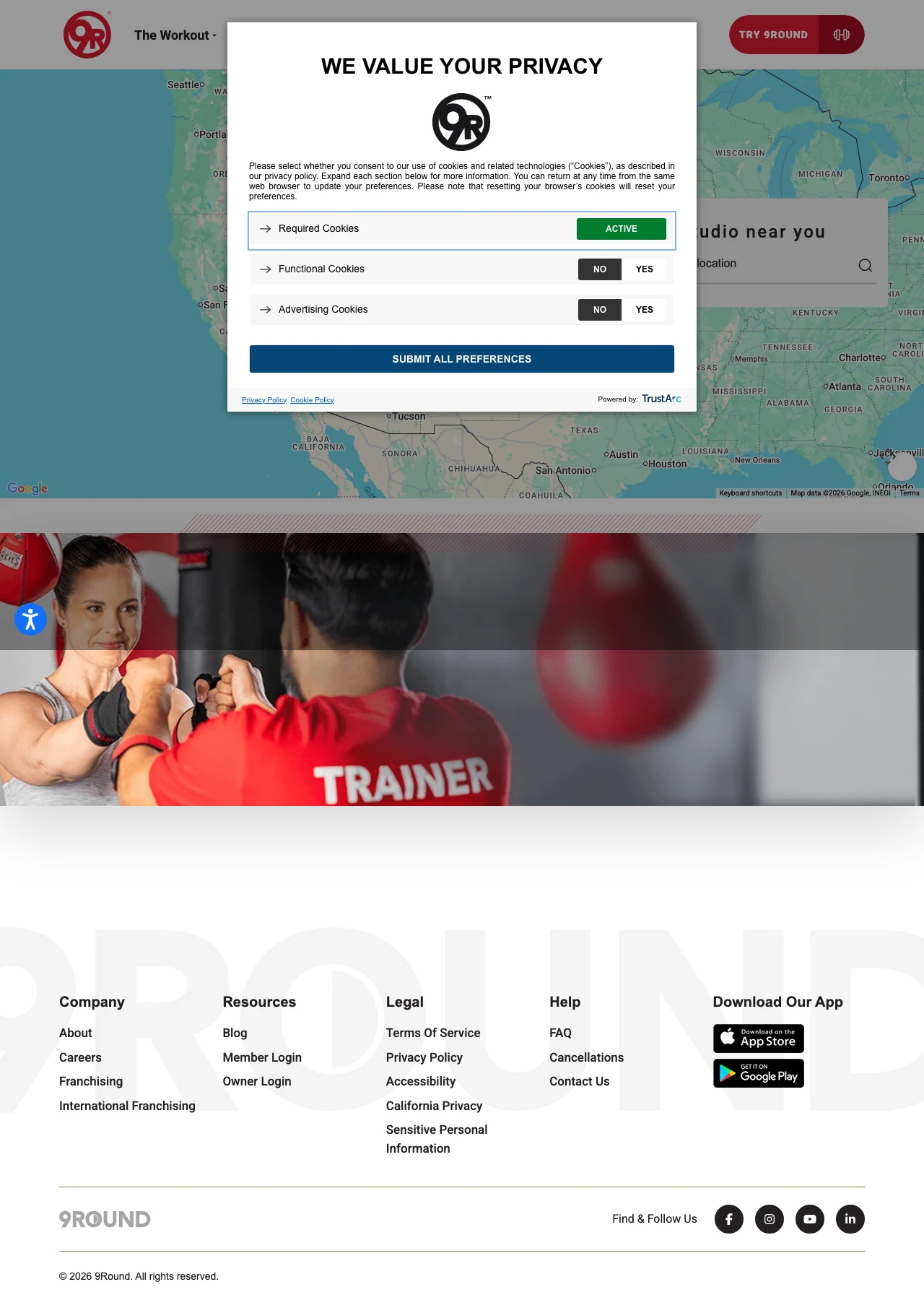
The 9Round locations page is a national map with a zip search box. Enter a zip and one of two things happens: either the map zooms to your nearest studios (with no trial offer, no pricing, and no session booking on this page) or you see 'Locations in your area coming soon' with an email capture form. The page spends paid traffic either way - visitors with a local studio get no conversion prompt on this page, and visitors without one get turned into 'coming soon' leads for a studio that does not exist. No trial offer, no price, and no Book Your First Session CTA above the fold.
- wrong promise
The page has no trial offer, no price, and no 'Book Your First Session' CTA above the fold; the visitor who searched for a local 9Round now has to zip-search, click a studio pin, and start evaluation on a separate studio page
- wrong promise
The main nav (Try 9Round, The Workout, Why 9Round Works, Meal Delivery, Locations, On Demand, Own a Studio, US Shop) offers 8 exit paths before the visitor finds any conversion element; 'Own a Studio' in particular invites prospective franchisees to click off the page on a visitor-intent search
- extra steps
The 'Locations coming soon' email capture asks for name and email with no incentive (no free class, no launch discount, no training offer); a visitor who cared enough to search for their zip gets a generic notify-me form with nothing in return
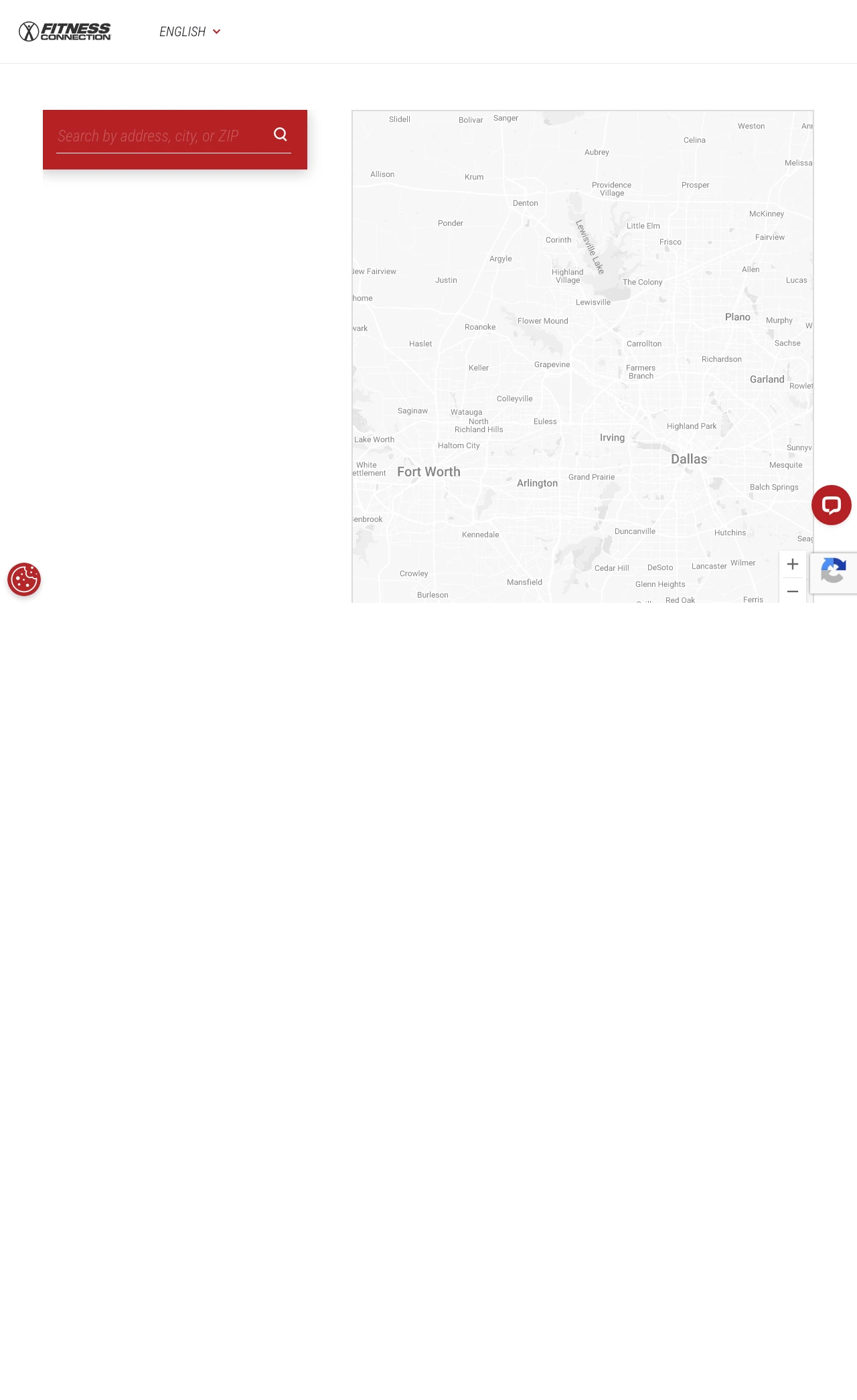
The path /join-now reads like the final step in a conversion funnel. The page that loads opens with a banner about Sugar Land getting new Booty Builder and Arsenal Strength equipment, followed by a Google Map of nearby locations with a zip search. There is no pricing, no membership tiers, no enrollment form, and no single 'Join Now' button above the fold. A visitor who clicked a Fitness Connection ad expecting to complete a membership sign-up has to hunt for their location on a map, click through to that location's page, and restart their evaluation.
- wrong promise
The /join-now URL loads a map and a location search rather than a membership-tier decision or an enrollment form; the conversion-intent visitor is pushed back into location discovery instead of commitment
- relevance
The Sugar Land equipment announcement dominates the top of the page, but it is relevant to a tiny fraction of the national traffic Fitness Connection buys - for visitors outside Sugar Land, this banner is dead weight above the real content
- wrong promise
Nav links in the footer (Locations, Classes, Amenities, Shop, Members, 5-Day Pass, Book a Tour, The Connection, FAQ, Contact Us, Careers) outnumber conversion elements on the page, giving the visitor far more ways to browse than to join
What the gym winners taught us
Winners pick one decision the visitor came to make (which plan, when to start, where to work out) and put the answer in the first viewport. Losers send traffic to a store locator or a promotional URL with no promotion, forcing the searcher to do the filtering Google already did - at which point most prospects just go back to the SERP.
- 1
Put a readable phone number in the first screen. Almost every gym page here hides the number or leaves it out, and a gym is a local purchase. Somebody choosing between you and the place down the road wants to ring and ask about parking, or childcare, or whether the pool is actually open. Make them hunt for it and they ring the other place.
- 2
Say what the free thing is, and stop making it look like Join. A free session and a paid membership sitting in matching buttons is a coin toss for the cautious visitor. Give the trial its own colour and its own words. The person who is not ready to pay today is exactly who your ad just brought in.
- 3
Show the review count before anyone scrolls. Not a single winner in this file does it, which is odd for a business people pick on how it feels. Stars and a count take up almost no room, and gyms collect them by the thousand without ever putting them where the money decision happens.
- 4
Cut the form to a name and a way to reach them. The gyms here that bother with a lead form already keep it short, so nobody has an excuse for a longer one. Every extra box is another chance to stop, and your staff can ask for a postcode on the call. If you change a single thing this week, change this.
Score your own gym page
Every line below came off a screenshot somebody sat and counted. Open your own page beside it and tick what it already does.
Now do this to your gym page
Winner #1 is an Anytime Fitness in Durango. Its ad reads 'Anytime Fitness Durango - Gym in Durango, CO, 81301'. So the click arrives asking one question: is this gym near me? On the page the address sits in small text under the headline. People join whichever gym is closest. We read that page against the ad that paid for the click, and postclick does that to your page, then builds the version that fixes it. The first audit and two concepts are free.