Google Ads for dental practices - procedure-level campaigns, call tracking, and landing pages that turn "dentist near me" searches into booked appointments.
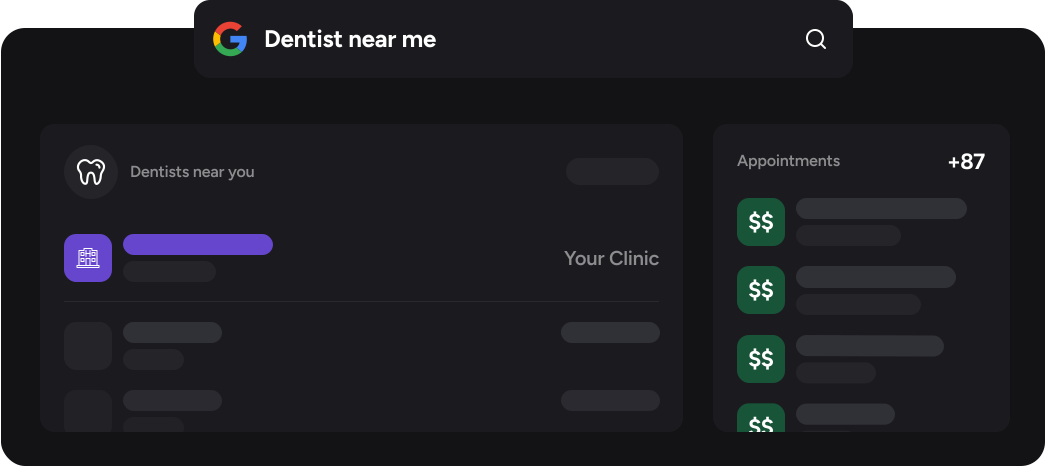
Every practice in your city is bidding on “dentist near me”. Same keyword, same radius, same generic ad. So the click goes to whoever pays most, and the patient goes to whoever answers the phone. Most dental PPC loses at both steps.
The second loss happens inside the account. Implants, Invisalign and veneers sit in the same campaign as cleanings and checkups, sharing one budget and one bid strategy. A single implant case is worth many hygiene visits, but a lumped-together account cannot tell the difference, so it spends wherever the clicks come cheapest.
Then there is the traffic you never wanted. Without a serious negative keyword list, dental campaigns quietly pay for searches like “free dental care”, “dental school” and “dental assistant jobs”. None of those people will ever sit in your chair, but every one of their clicks gets billed at local dental prices.
The last leak happens off-screen. The ads generate calls, but if nobody tracks them, the campaign takes the blame for appointments the front desk never picked up. Call tracking makes that visible, and it is the first thing we check.
We wrote up the whole DIY version in our dental PPC playbook if you want to see under the hood. This page is the other option: we run it for you.

An implant patient is worth a multiple of a cleaning patient, and your campaigns should know it. We split the account by procedure value - emergency, cosmetic, routine - so the budget chases the patients your practice actually wants more of.
Every engagement opens with a free audit of the account you already have: where the spend went, which search terms actually triggered your ads, and whether your tracking can tell a booked patient from a bounced visitor. For a dental practice that means calls first. Most patients phone, so call tracking becomes the primary conversion, with booking-form requests counted alongside it.
Then the ongoing work. Keyword research aimed at booking intent rather than dental questions. Negative keywords that keep freebie-hunters and job seekers out of the budget. Ad copy written per procedure, then A/B tested against real search behavior. Bid strategy set by tier, because what an implant click justifies makes no sense for a cleaning click. And a radius that matches how far your patients actually travel, not a default circle on a map.
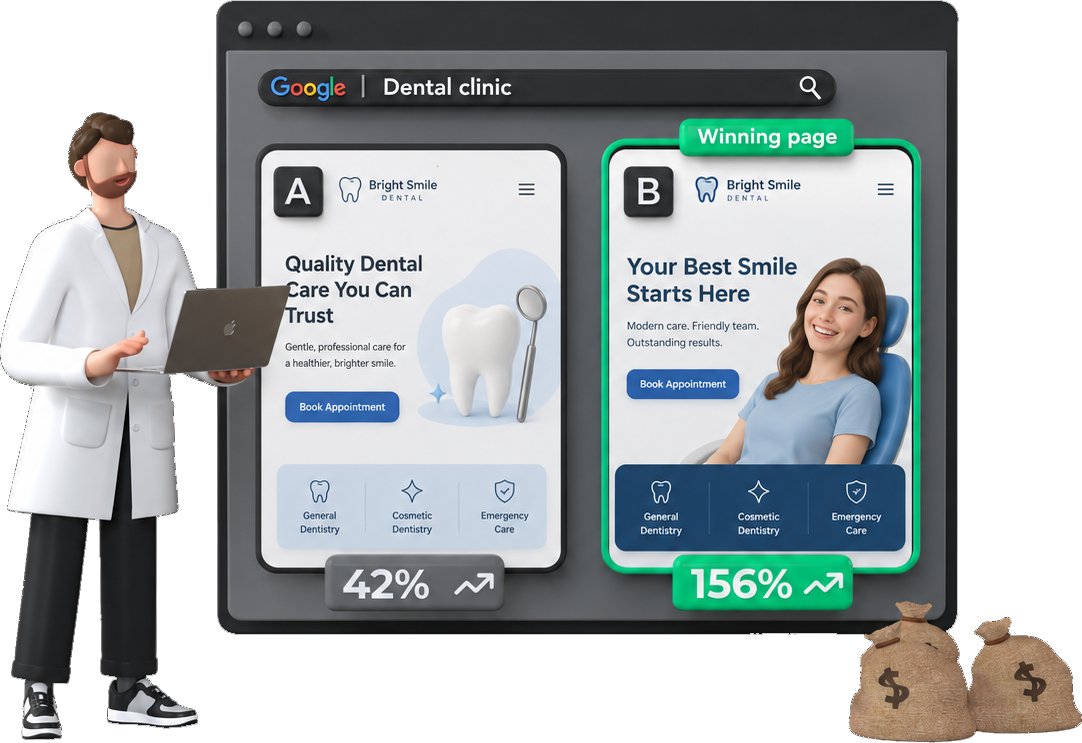
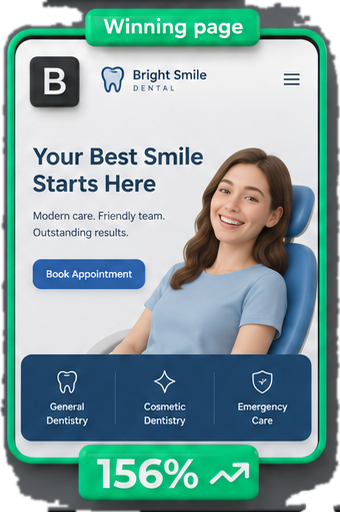
The click is only half the job. An implant ad should land on an implant page, not your homepage. Our teardown of 32 real dental landing pages shows what the winning practices put above the fold, and on our Advanced package we design those landing pages for you.
Management starts at $2,000 a month, flat fee, no percentage of ad spend. One or two implant cases typically covers it - which is exactly the math we’ll be optimizing for.
The structure matters. A percentage-of-spend deal pays the agency more every time your budget grows, whether or not the patient count does. A flat fee only survives if the spend keeps earning its keep.
Everything each package includes is on our full pricing breakdown, and the reviews further down this page are our clients in their own words.
Full Google Ads management: keyword research, negative keywords, ad copywriting and A/B testing, bidding strategy, conversion tracking and competitor analysis.
Everything in Starter, plus social ad platforms, unlimited ad creative design and unlimited landing page design.
$2,000 a month on our Starter package or $4,000 a month on Advanced, billed as a flat monthly fee. We never take a percentage of ad spend, so the fee stays the same as your budget grows.
The full breakdown of each package is on our PPC consulting page.
It depends on the procedure and the city. Emergency and implant keywords are among the more expensive clicks in local search, while cleaning and checkup terms cost far less, so any single account-wide number would be a guess.
That spread is exactly why we split campaigns by procedure tier, so each tier gets a bid that makes sense against what the patient is worth. A free audit of your account shows the real numbers from your own market.
Yes, and high-value procedures are where dental PPC pays off. Implants, Invisalign and veneers each get their own campaigns, ad copy and bid strategy instead of sharing a budget with cleanings.
On our Advanced package we also design a dedicated landing page for each procedure you advertise, so the click lands on a page about the treatment the patient actually searched for.
Price-shoppers are usually a keyword problem, not a Google problem. Accounts that attract them tend to bid on bargain-intent searches and send every click to a generic homepage.
We build negative keyword lists that block the free and cheap searches, point the budget at booking-intent terms, and match each ad to a page about the procedure it advertises. The starting point is a free audit of your account, so you see what we would change before you commit to anything.
Doug Haines
You need to get your paid channel working. The results with PPC.io have been amazing and the demand has outstripped what we can deliver.
David Dinsmore
They've helped us consult on PPC efficiency for some of our billion-dollar clients. Next-level strategies.
Kathryn Wiley
Helped scale my travel business to heights I never thought possible. I almost can't handle the number of new leads we're getting.
Arlene McCoy
Helped us massively scale our eCommerce store. Nothing but glowing praise for them - Highly recommended.