We analyzed 45 auto insurance landing pages. Only 7 are worth stealing from.
We read 45 auto insurance pages that were paying for Google Ads clicks, top to bottom. These 7 are the ones worth your time. Everything we found is here, free.

45 landing pages screened
From real auto insurance Google Ads campaigns in the US
7 winners curated
The landing pages actually worth stealing from
3 burning money
So you know exactly what to avoid
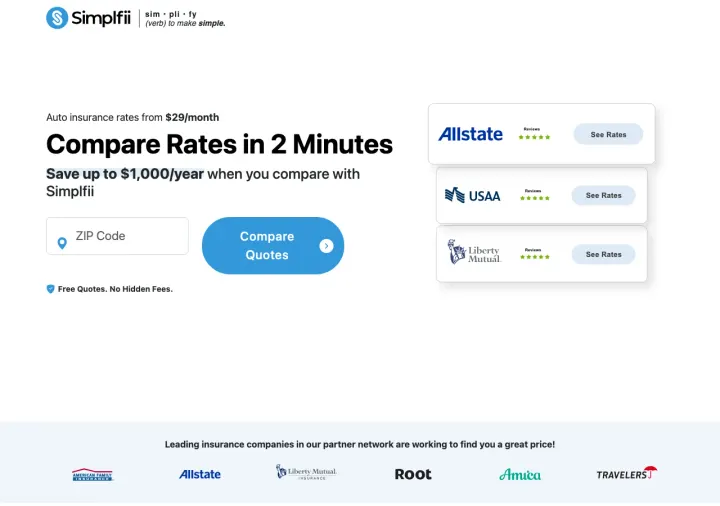
Simplfii is a quote request platform, not an insurer, and it took the top slot by cutting the first screen down to almost nothing. A monthly rate above the headline, a yearly saving under it, one ZIP box beside a blue Compare Quotes button, and a shield line reading Free Quotes. No Hidden Fees. On the right, a stack of insurer cards each carry a star row, so the brands do the reassuring the platform cannot do for itself.
Strip your above-fold to just a ZIP code field, a savings claim with a specific dollar amount, and carrier logos - nothing else.
- +
One ZIP box starts the quote fewer stepsone afternoon
Free Quotes. No Hidden Fees.A single box, a blue Compare Quotes button beside it, and a shield line underneath answering the two objections a stranger has right then. Nothing personal is asked before a rate appears. Cut your first ask down to the smallest question that still lets you quote.
- +
Rate sits on its own line above headline price framingeasy
Auto insurance rates from $29/monthOrdinary text, monthly figure in bold, and the headline underneath sells speed instead. Someone with four insurance tabs open is hunting for a number, and here it lands first rather than buried inside a sentence. Lift your own figure out of the headline.
- +
Insurer cards fill the first screen borrowed trusthard to earn
Leading insurance companies in our partner network are working to find you a great price!Allstate, USAA and Liberty Mutual each get a card with a logo, green stars under the word Reviews, and a See Rates button. A stranger has never heard of Simplfii. If you resell or compare, put the trusted names where the decision starts.
- ✕
Star rows carry no count or source weak proofone afternoon
Each insurer card shows five green stars under the word Reviews. Nothing says how many reviews, from whom, or whether the score belongs to the insurer or to Simplfii. Put the count, the platform name and a link on every rating, or take the stars off.
- ✕
Footer names nobody behind the business missing credentialsone afternoon
Scroll to the foot and you get a copyright line and a stack of compensation disclaimers. No licence number, no registration, no company address, no phone number anywhere. Put your licence number, your address and a number that rings in the footer.
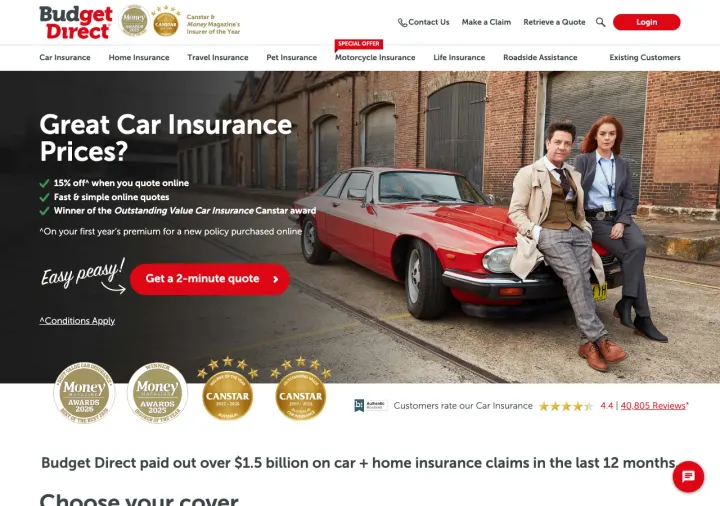
Budget Direct sells its own policies and stacks its proof harder than anything else in this file. Under the discount and the quote button runs a band of award medallions from Money Magazine and Canstar, and beside them a rating with the review count and a link out to read them. The bit worth noticing is the qualifier printed in the hero itself, under the offer, saying exactly what the discount applies to.
Stack your industry awards visually in a badge row below the hero, then add a specific claims-paid dollar figure to prove you actually pay out.
- +
Award medallions run under the hero photo borrowed trusthard to earn
Winner of the _Outstanding Value Car Insurance_ Canstar awardGold seals for Money Magazine twice and Canstar twice, each with the award name and the years printed inside. The same claim also appears as a hero bullet in words. Find whoever rates or awards in your market, and put the mark and the year where the price is.
- +
Review count links to the reviews reviewshard to earn
Customers rate our Car InsuranceBeside the medallions sits an Authentic Reviews ribbon, a half filled star row, the score, and the count set as a link straight through. That last part separates it from a graphic: you can read the bad ones. Publish the count, name the platform, let the link out.
- +
Discount condition prints inside the hero answers a worryeasy
^On your first year’s premium for a new policy purchased onlineThe discount bullet carries a caret, answered in the hero itself rather than a footer nobody reaches. It says exactly what the discount applies to and who gets it. A shopper caught by a headline discount before is looking for that sentence. Print your condition under your offer.
- ✕
Two nav rows lead away from the quote too many linksone afternoon
Above the hero sit Contact Us, Make a Claim, Retrieve a Quote and Login, then Home, Travel, Pet, Life, Motorcycle and Roadside. Every one takes a visitor you paid for somewhere that is not the quote. Strip the header to a logo and the quote button.
- ✕
No field appears anywhere on the page fewer ways inneeds a developer
[Get a 2-minute quote](https://www.budgetdirect.com.au/start/gold-car.html)Every route off this page is a button sending the visitor to a different site section to start over. That is defensible for a brand with this much proof, but somebody nearly ready has no way to raise a hand. Put the quote's first question on the page.
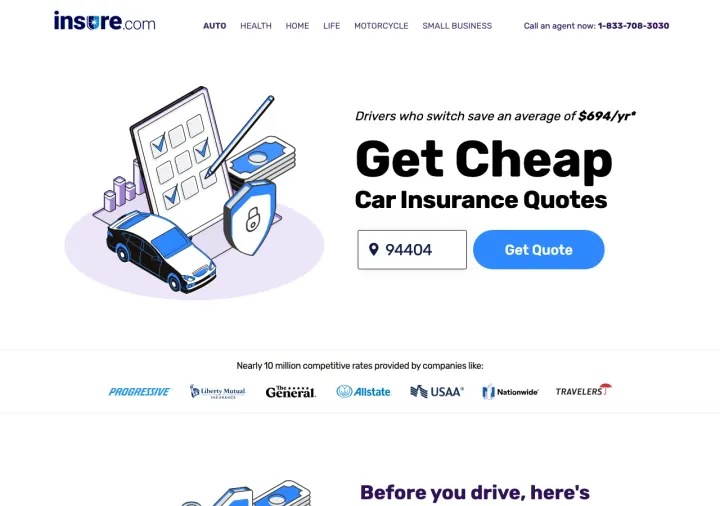
Insure.com wins on the offer line rather than the layout: a switching saving printed above the headline, then a ZIP box already filled in with the visitor's own code. The rest is honest about being a comparison engine. Where it slips is the scrape, which shows a hero template full of unfilled slots, so somebody arriving on the wrong variant can be shown a headline with a gap where the number belongs.
Lead with a data-backed savings claim ("Drivers who switch save an average of \/yr") rather than a generic "save money" promise.
- +
Saving reads as an average, not up to price framingeasy
Drivers who switch save an average of $694/yrAn average and a year, rather than an up-to figure. Up to is the phrase every insurance shopper has learned to discount, because it describes the luckiest customer on the list. Work out what your customers actually save on average and print that.
- +
ZIP box arrives already filled in fewer stepsone afternoon
Get Quotes NowThe visitor's own code sits in the ZIP field, so the form looks answered before they touch it and only the button is left. If you can work out anything from a click, their city, their state, the keyword they searched, fill it in for them.
- +
Discount tiles name who qualifies makes it easierone afternoon
Find out if you are eligible for these discounts:Good Driver, Bundling and Hybrid Vehicle, three tiles each with a percentage in a black speech bubble and a sentence saying who qualifies. Recognising yourself in a tile is what makes the button worth pressing. Name your discounts and say who gets each one.
- ✕
Headline variants render with empty slots breaks the illusionneeds a developer
Unlock Rates as Low as $/This page swaps the visitor's state, age or driver type into the headline, and the scrape shows the slots unfilled: rates as low as a dollar sign and a slash, drivers over nothing. Write a fallback for every slot and test the ones that never fire.
- ✕
Logo band replaces any rating at all weak proofhard to earn
Nearly 10 million competitive rates provided by companies like:The only proof in the first screen is a row of carrier logos under a line about how many rates the engine has seen. No star rating, no review count, no score. Volume is not the same as somebody vouching for you. Get a review platform running.
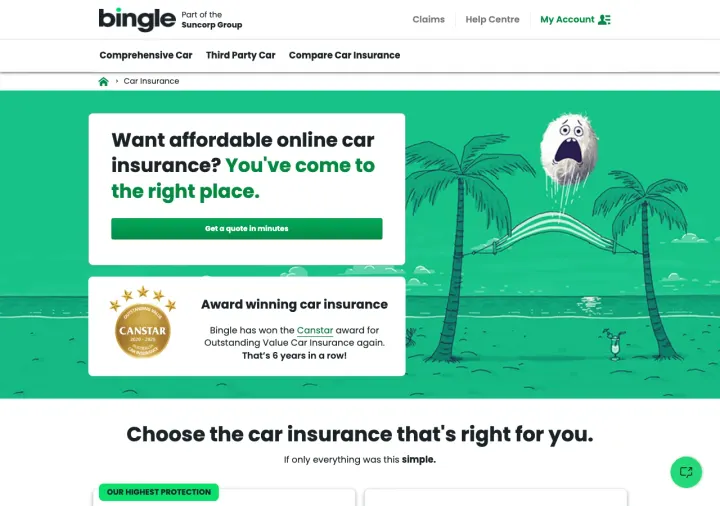
Bingle is a Suncorp brand and it does one thing this list is short of, which is the award card. A gold Canstar medallion sits in a white panel directly under the hero, with a line saying how many years running beside it. There is no price and no rate anywhere in the first screen. The whole page is asking you to take the award and the word affordable on trust, and that is the gamble.
If your brand has won the same award multiple years running, lead with the streak ("6 years in a row") rather than just the latest win - streaks are more impressive than single wins.
- +
Award gets a card of its own borrowed trusthard to earn
Award winning car insuranceA white panel sits below the headline block, a gold Canstar medallion beside a short paragraph naming the award and how many years running. If you have won something, give it that much room and say how long the run is. Nobody can buy a run.
- +
Cover columns argue with ticks and crosses choice architectureone afternoon
Choose the car insurance that's right for you.Comprehensive and Third Party sit side by side, marks down each column, so the difference reads in one glance rather than a paragraph. Comprehensive carries a green chip reading OUR HIGHEST PROTECTION. Lay your tiers out that way and let the marks argue.
- +
Footer names who collects the reviews reviewseasy
All customer reviews published on this site are collected, moderated and managed by Bazaarvoice, a third-party ratings and reviews provider.It says a third party collects and moderates them, and that they get captured straight after a purchase or a claim. That sentence turns a wall of glowing quotes into evidence. Name your platform and say when the reviews are taken.
- ✕
First screen carries no figure at all money too lateeasy
The hero asks whether you want affordable car insurance and answers with a quote button. No rate, no discount, no from figure, and the cover cards below are cut off at the fold. Affordable is a word your competitor is also using. Put a figure next to it.
- ✕
Score and count wait near the footer proof too lateone afternoon
Our customers rate us!The score, the count and the customer quotes sit below the cover comparison, below Why choose Bingle, below the whole feature list. The award card is up top doing its job alone. Reviews and awards answer different questions. Move the score up beside the award.
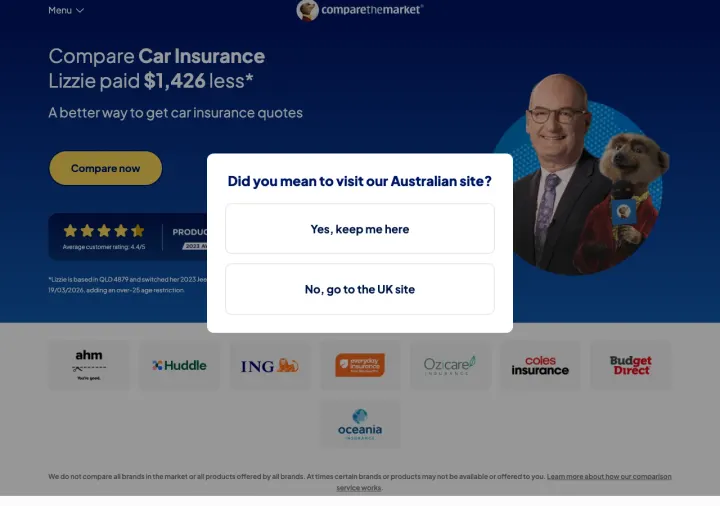
Compare the Market opens on a named customer and what she personally saved, which is a far better hook than a range, and the small print under it says where she lives, what car she drives and when she switched. Then a modal asking whether you meant to visit the Australian site lands over the middle of the hero and clips the award badge in half. The best line in the file is sitting behind a dialogue box.
Replace generic savings claims with a named customer example ("Sarah saved ") - a real name makes the savings feel achievable rather than hypothetical.
- +
One named customer carries the headline made personaleasy
Lizzie paid **$1,426** lessNot up to and not an average, but one woman and the exact amount she saved, printed in the biggest type on the page. A made up number never has an odd amount on the end. Find one real customer, get their permission, and put their saving in the headline.
- +
Footnote shows the working under the claim answers a worryeasy
\*Lizzie is based in QLD 4879 and switched her 2023 Jeep Grand Cherokee Comprehensive Insurance Policy on 19/03/2026, adding an over-25 age restriction.The asterisk is answered in the hero itself: her postcode, her car, the exact date and the restriction she added. It proves the claim, and it quietly tells the reader their own saving depends on their own car. Show the working under your best number.
- +
Rating pill sits under the button reviewsone afternoon
Average customer rating: 4.4/5A dark pill carries five gold stars, the score, and an award badge from a rating body beside it. Score and award in one strip, at the point where somebody decides whether to press Compare now. Most pages put this halfway down, where it changes nothing.
- ✕
Geo dialogue lands over the best hook covers the pageneeds a developer
Compare nowA white box asking whether you meant the Australian site covers the middle of the first screen. It hides the right half of the award badge and cuts the disclaimer line. Run your country check before the page paints, or use a thin bar at the top.
- ✕
Landing page turns into a search guide loses focusone afternoon
Meet our car insurance expert,Under the hero come cover type tables, five things to know, an expert video, a long accordion and two bylines. All of it is written for search, and the person who clicked your ad came for a quote. Keep the guide for the visitors who arrive by searching.
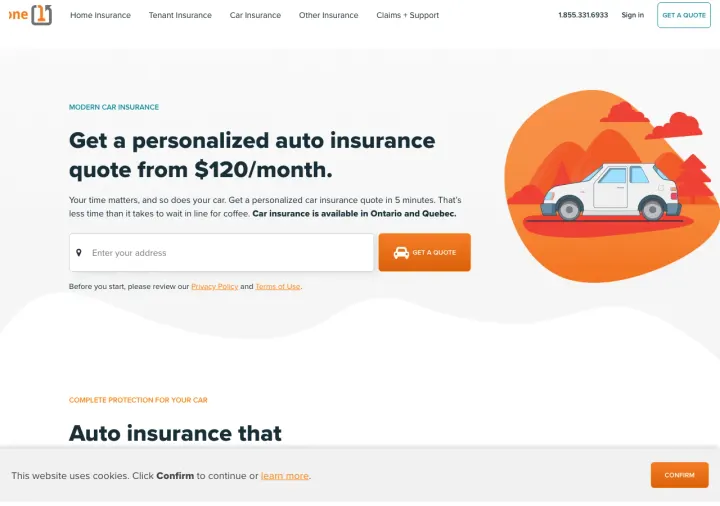
Square One sells direct in Ontario and Quebec, and its hero carries a monthly rate, a headline saying the quote is personalised, and a single box asking for your street address. That is the boldest first ask on this list. It buys the visitor a real quote instead of a call back, and the copy beside it promises the quote in minutes rather than a phone call, which is what makes the ask survivable.
Combine a starting price anchor with a time commitment ("from \/month, quote in 5 minutes") so the visitor knows both the cost and the effort before they start.
- +
Hero asks for a street address only fewer stepsa product call
A single box reading Enter your address, and it wants a street rather than a postcode. That is the boldest first ask on this list, and it works because the promise beside it is a real personalised quote in minutes. Say what your first question buys, right next to it.
- +
Speed claim compares to a coffee queue answers a worryeasy
That’s less time than it takes to wait in line for coffee.A duration on its own means nothing, because the reader has no idea whether it is optimistic. Comparing it to something they did this morning makes it real, and it quietly promises no phone call in the middle. Find the everyday thing your process is shorter than.
- +
Review count set larger than any headline reviewshard to earn
Verified reviewsThe words verified reviews sit under it, with real quotes carrying first names, cities and dates beside it. Scale is doing the arguing, and the dates and towns are what make it checkable. If you have the volume, print the number at that size.
- ✕
Two sections print different ratings breaks the illusioneasy
The review section gives one average. The section immediately below says customers rate Square One at a different figure, off the same review count. A careful reader notices, and once one number is loose every other number is loose too. Pick one source and make every mention agree.
- ✕
Cookie bar covers the fold covers the pageone afternoon
This website uses cookies.A grey bar runs the full width of the bottom of the first screen with a Confirm button on the right. It hides the section heading under the hero. Load your own page in a private window and see what your visitor actually gets.
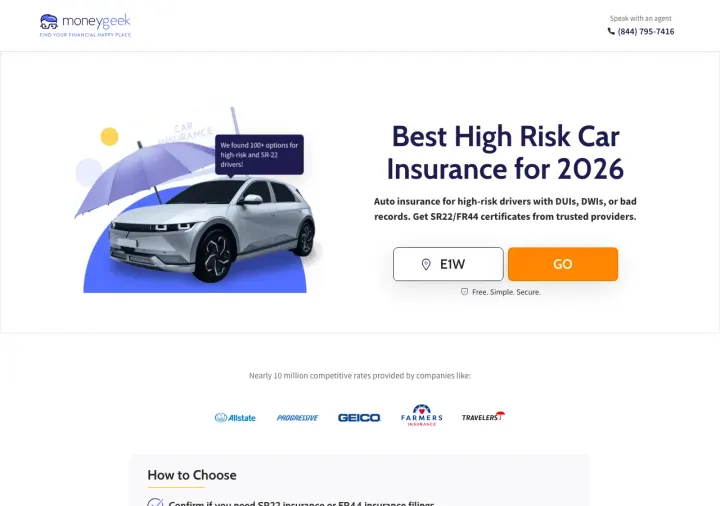
MoneyGeek does not sell insurance to everybody. It targets the driver with a DUI or a bad record, and it says so in the subhead under the headline, naming the certificates that reader has been told they need. Speaking to a group nobody else on this page wants is the whole move. What comes after the ZIP box is a How to Choose block and a set of questions written for a search engine rather than a driver.
Serve SR-22 and FR-44 keywords with an editorial 'Best High Risk Car Insurance' page instead of a generic quote funnel. The visitor who just got a DUI is not ready to trust one carrier, they want a shortlist from someone who sounds like a journalist.
- +
Subhead names the driver it is for positioningeasy
Auto insurance for high-risk drivers with DUIs, DWIs, or bad records. Get SR22/FR44 certificates from trusted providers.One line tells a driver with a conviction that this page is for them, then names the certificate they have already been told to get. Everyone else leaves. Picking a group nobody else writes to is the cheapest positioning there is. Say who your page is for.
- +
How to Choose block teaches the checklist makes it easierone afternoon
Look for flexible payment options in insurance for bad drivers policiesThree ticked lines telling the reader what to check before they buy, rather than a sales pitch. Somebody refused before does not know what normal looks like. Teaching them makes you the one who explained it. Write the buying guide for your own product.
- +
Three words answer the hesitation answers a worryeasy
Free. Simple. Secure.A shield icon and one short line sit directly under the ZIP box, at the moment somebody hesitates over typing anything at all. It costs nothing and settles the free, the effort and the safety question together. Put your version under your own first field.
- ✕
Same phrases repeat in nearly every sentence written for a crawlerone afternoon
Research nonstandard car insurance companies' reputation for handling SR22 insurance claims and supporting auto insurance for high risk drivers through the recovery process.High risk car insurance, nonstandard car insurance, auto insurance for high risk drivers, insurance for bad drivers: they come round again all the way down. It reads like it was written to be counted. Nobody crawls a page you buy traffic to.
- ✕
Page ends at the questions weak offerone afternoon
Frequently Asked QuestionsAfter the checklist and a repeat of the ZIP box, a set of questions runs and then the footer arrives. No rates, no providers named beyond the logo band, no reviews. A high risk driver fears being refused and this page never addresses it. Answer that fear first.
What the car insurance winners do
Wildcards
Pages that break the playbook in interesting ways
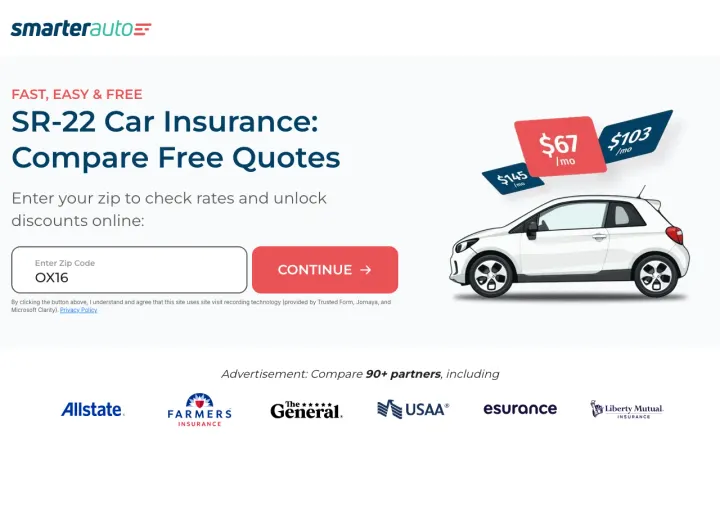
Use URL parameters to dynamically inject the exact keyword the visitor searched for into the headline - "SR-22 Car Insurance" for SR-22 searchers, "Full Coverage" for full coverage searchers.
- made personal
Dynamic headline pulled from URL parameters (title=SR-22+Car+Insurance) - the page headline matches the exact ad copy/keyword
- fewer steps
Visual price comparison (\ vs \ crossed out) creates instant perceived savings
- credentials
"Compare 80+ partners" with carrier logos (Allstate, Farmers, The General, USAA, Esurance, Liberty Mutual) shows breadth
- no proof
The page is extremely minimal - almost too stripped down to feel trustworthy for a financial product
- no proof
No reviews, no testimonials, no trust badges beyond carrier logos
- wrong promise
The raw HTML source in the scrape suggests this may be a thin affiliate page
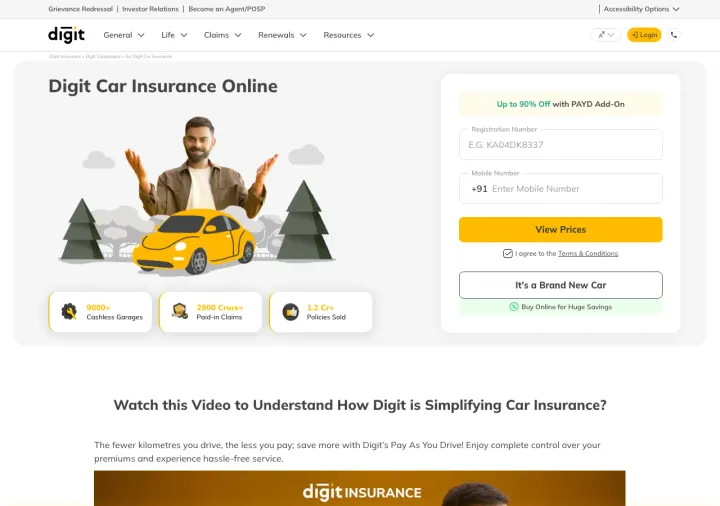
Why this breaks the rules: Digit asks for a vehicle registration number (not a ZIP code, not a name) as the very first field and ties the entire offer to a Pay-As-You-Drive discount. It flips the script from 'who are you' to 'what do you drive', which for a low-mileage shopper is a much more flattering opening question.
- fewer steps
Registration number as the first input field pre-fills vehicle make, model, year from a government database, so the quote form has fewer questions than a competitor's. The visitor experiences the page as faster even if the underlying quote logic is identical.
- answers doubts
Pay As You Drive add-on headline ('Up to 90% Off with PAYD Add-On') reframes the quote as a mileage game rather than a risk game. For drivers who know they barely drive, this is an irresistible hook that no big-brand US carrier highlights on their landing page.
- answers doubts
Stat ribbon under the hero (9000+ cashless garages, 2900 Crore paid in claims, 1.2 Cr policies sold) turns abstract trust claims into specific numbers. The 'garages' metric is particularly clever because it answers the real worry (will my car actually get fixed) not the marketing worry (do they pay claims).
- no proof
The illustrated hero character (waving man with yellow car and cloud trees) is juvenile for a product that costs hundreds of dollars. It undercuts the credibility the stat ribbon is working hard to build.
- too much at once
Mobile number requirement alongside registration number forces a second identifier upfront. Visitors on a comparison kick will bail at the phone field because they know it triggers sales calls.
Compare the winners
The same questions asked of every winner, so you can find the row that matches the traffic you are already buying.
| Page | The hook | Form fields | Offer named up top | Rating in the first screen | Phone in the first screen | Standout move |
|---|---|---|---|---|---|---|
| #1Simplfii | A monthly rate, then a ZIP box | 1 | Yes | Yes | No | Insurer cards carry the stars |
| #2Budget Direct | A discount for quoting online | No form | Yes | Yes | No | Award medallions beside the rating |
| #3Insure.com | What switchers save on average | 1 | Yes | No | Tiny | The ZIP box arrives prefilled |
| #4Bingle | An award, and no price at all | No form | No | No | No | A Canstar card under the hero |
| #5Compare the Market | A named customer and her saving | No form | Yes | Yes | No | The footnote names her car and her postcode |
| #6Square One | A monthly rate, personalised | 1 | Yes | No | Tiny | A single box, and it asks for the address |
| #7MoneyGeek | Written for the high risk driver | 1 | No | No | Tiny | Names the certificate that reader needs |
Read the keywords you are buying, then find the row that matches them. Somebody typing cheap car insurance wants a rate and a box to type a postcode into, and they are pricing you against every other tab they have open. Somebody typing SR22 insurance has a problem, knows the paperwork by name, and needs to be told you handle it before anything else. You paid the same for both clicks.
The copy bank
Lines lifted word for word off the pages above. We tell you whose page each came from, and one click copies it.
Want affordable online car insurance? You've come to the right place.
Get Cheap Car Insurance Quotes
Best High Risk Car Insurance for 2026
Compare Rates in 2 Minutes
Losers
3 pages burning ad spend with fundamental issues
Every click to these pages costs real money. We found pages with no reviews or badges anywhere, headlines that ignore what the searcher actually typed, and CTAs that give no reason to click. Here is what to avoid.
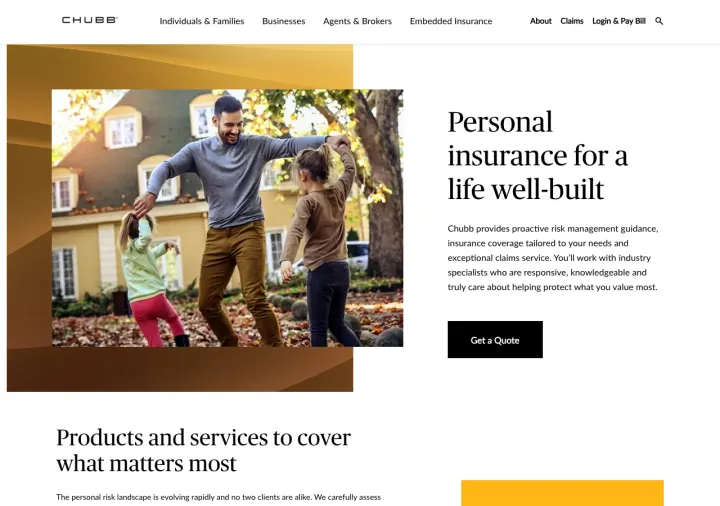
Paid auto insurance clicks land on a page that never mentions auto insurance. The visitor has to navigate through product categories to find what they searched for.
- missing proof
This is a generic corporate homepage covering all personal insurance products - zero auto insurance specificity
- extra steps
No pricing, no quote form above the fold, no ZIP code input - just a generic "Get a Quote" button
- too much at once
Full navigation bar with Individuals, Businesses, Agents, Embedded Insurance, About, Claims - too many choices
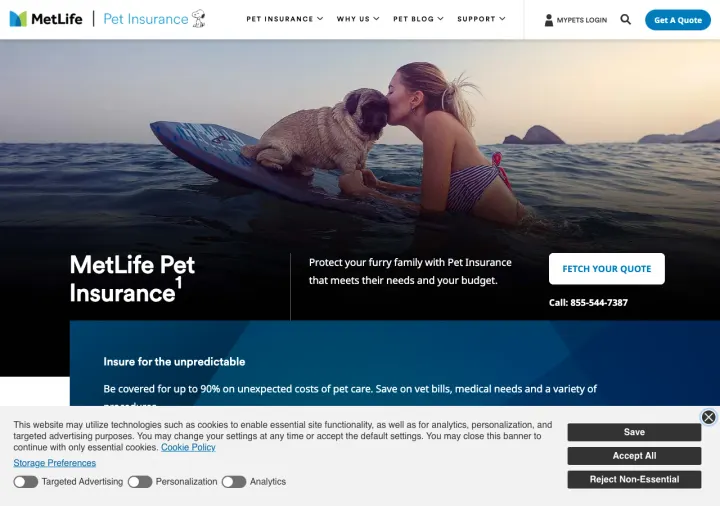
Auto insurance searchers land on a pet insurance page. 100% of paid clicks are wasted because the product is wrong.
- wrong promise
This is a pet insurance page showing in auto insurance ad results - total keyword/landing page mismatch
- wrong promise
cookie banner obscures 40% of the visible viewport on load
- focus
Full navigation with Pet Blog, Why Us, Support dilutes the landing page experience
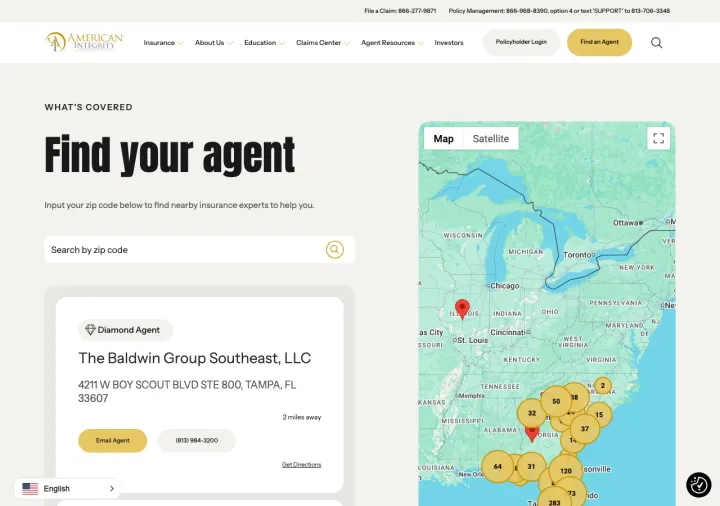
Quote-intent visitors land on an agent locator. They wanted a price in 2 minutes, not to drive to an office.
- wrong promise
Visitors searching for auto insurance quotes land on an agent finder page - they wanted a quote, not a map
- missing proof
Full corporate navigation with About Us, Education, Claims Center, Agent Resources - this is a corporate site page
- too much at once
The page loads a huge agent directory (6,555 links) which is slow and overwhelming
What we learned
ZIP code as the single above-fold input field is the smallest ask a page can make, and typing it already says you are shopping
The strongest auto insurance landing pages ask for exactly one thing above the fold: a ZIP code. This works because it is low-commitment (no personal info), instantly qualifies the visitor geographically, and creates forward momentum into the quote funnel. Pages that open with name/address/DOB forms create immediate friction for a visitor who is still comparison-shopping.
Showing carrier logos above the fold signals breadth of comparison and borrows trust from known brands
The best comparison/aggregator pages display 6-8 recognizable carrier logos (Allstate, USAA, Farmers, Geico, Progressive) directly below the quote CTA. This serves two purposes: it tells the visitor they will see multiple options, and it borrows trust equity from brands the visitor already knows. Pages without carrier logos feel like they could be a single unknown insurer.
Savings anchors with specific dollar amounts outperform generic 'save money' promises
Pages that state a concrete savings figure ('Save up to $1,000/year', 'Drivers who switch save an average of $X/yr') create a tangible value proposition. The dollar amount gives the visitor a mental anchor for what the comparison exercise is worth. Generic claims like 'Great Car Insurance Prices' or 'affordable online car insurance' lack this specificity and blend into every other insurance ad.
Award badges and star ratings provide third-party validation that self-claims cannot match
Budget Direct and Bingle both lead with Canstar award badges prominently displayed above the fold. Compare the Market shows star ratings and a specific savings testimonial. These third-party validations are more persuasive than self-declared 'best price' claims because the visitor knows the company did not award itself. Pages relying solely on self-claims ('Fast, Easy, Free') miss this trust layer.
Winners use a single ZIP code input above the fold, show recognizable carrier logos, and anchor with specific savings amounts. Losers send paid auto insurance traffic to generic corporate homepages (Chubb, American Integrity) that cover every product line, or bury the quote funnel behind an agent-locator directory that assumes the visitor is already committed to a carrier.
If you're building a page like these yourself, here's my comparison of AI landing page builders, with prices and what each one is best for.
What the auto insurance winners taught us
Car insurance is the cheapest thing in the world to comparison shop, so the visitor has your page open in one tab and somebody else's in the next. The pages that win here put the number and the outside proof in the same screen, and then get out of the way of the form.
- 1
Put the number above the headline, not inside it. Simplfii prints its monthly rate on the line above "Compare Rates in 2 Minutes", and Insure.com prints its average saving above Get Cheap Car Insurance Quotes. The headline is doing the promise, and a small line above it is doing the price. Somebody scanning four tabs reads the number first either way, so you may as well put it where their eye lands and let the headline sell the speed.
- 2
Borrow proof from a body that is not you. The best proof in this file all comes from somewhere else. Budget Direct runs Money Magazine and Canstar medallions under its offer. Bingle runs one Canstar card and names how long the run is. Bingle also prints who collects its reviews, which is the line that stops a score reading as your own marketing. If you have an award, a rating body or a review platform, put its name and its mark above the fold and link it out.
- 3
Ask for one thing, and make it the thing that gets a real quote. The pages that carry a lead form all ask a single question. Three ask for a postcode, which is cheap to answer and buys you a rate range. Square One asks for a street address, which is a much bigger ask and buys a real personalised quote. Pick the one your product can actually honour, then delete everything else from the first step.
- 4
Get the layer off your own hero. Compare the Market has the best hook in the file, a named customer and the exact amount she saved, and a geo prompt lands over the middle of it and cuts an award badge in half. Square One drops a cookie bar across the bottom of the first screen. Neither one is a design decision anybody made on purpose. Load your page in a private window on the machine your visitor uses and see what is actually covering it.
- 5
Say who the page is for, if it is not for everybody. MoneyGeek writes to drivers with a DUI or a lapse and names the certificate they need in the subhead, so the right reader knows in a second and the wrong one leaves. That is a cheaper click for you either way. The catch is what follows: the rest of that page repeats its keyword phrases sentence after sentence, which reads as written for a crawler. Name your reader, then talk to them like a person.
Score your own auto insurance page
Every line below came off a screenshot somebody sat and counted. Open your own page beside it and tick what it already does.
Now do this to your own page
comparethemarket.com.au made our list of 7 winners and still hits you with a modal asking "Did you mean to visit our Australian site?" It blocks the entire page on first load. Every click you paid for lands on that. You only catch it by opening your own page cold, straight from the ad, the way a stranger does. That's what postclick does with your URL - it names what's costing you quote starts, then designs new versions you can look at and builds the one you pick.