 Our AI Tools
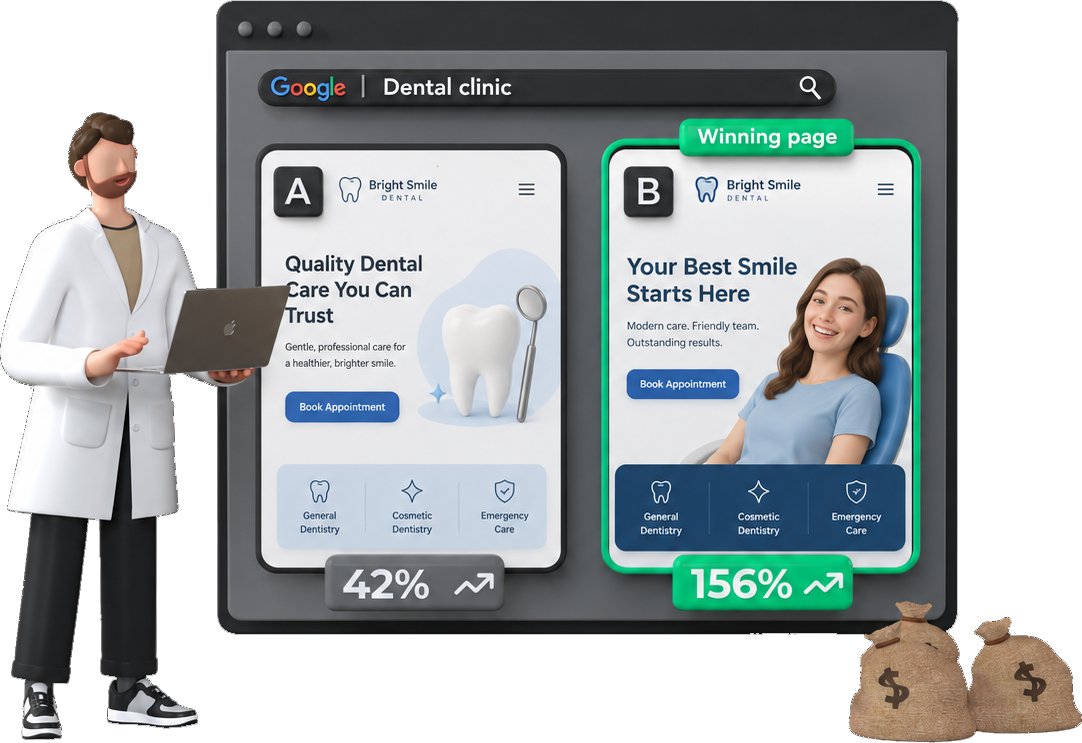









You need more clients to afford hiring someone. But you need to hire someone to handle more clients.
👉 It’s the trap every PPC agency hits around the 10-15 client mark. You’re maxed out. New opportunities are coming in, but you’re already working nights and weekends just to keep current clients happy.
The obvious answer is to hire. But hiring can be expensive, risky, and slow.
This is exactly why we’re building PPC.io - to help agencies multiply their capacity without multiplying headcount. Sign up for early access here .
In this article, I’ll walk you through the complete strategic menu for scaling your Google Ads agency without hiring.
The Real Math of Agency Capacity
Before we talk about scaling solutions, you need to understand the actual constraint you’re dealing with.
How many PPC accounts can one person realistically manage?
The answer depends entirely on client size.
- For large accounts ($50k+/month spend), 3-5 clients maximum.
- For mid-market accounts ($5k-$50k/month), 10-15 clients is realistic.
- For small business accounts ($500-$5k/month), you can manage 20-30 accounts with templatized processes.
Notice the pattern? Higher-paying clients require exponentially more attention.
❌ This is why the “$500/month retainer model” is a trap. To hit $15,000/month revenue, you need 30 clients. That’s unbelievably challenging to manage well as a solo operator.
✅ Meanwhile, 8 clients at $2,000/month gets you to $16,000/month revenue. Suddenly, scaling without hiring becomes realistic.
Every scaling tactic falls into one of three categories:
💰 Positioning & Pricing: Charge more per client so you need fewer clients to hit your revenue target.
⚙️ Automation & Tools: Reduce the time each client requires through smart automation.
🤝 Outsourcing (White Label): Hand off execution to someone else - but from a position of strength, not desperation.
Most agencies jump straight to option three. The smart play is to exhaust options one and two first.
Strategic Positioning: The Highest Leverage Move
The fastest way to scale without hiring isn’t to work faster. It’s to charge more per client so you need fewer clients - the economics of PPC pricing back this up.
I know what you’re thinking: “My market won’t pay more.”
That’s because you’re positioning yourself as a generalist competing on price. When you’re “a PPC agency for everyone,” the only differentiator left is cost.
👉 Here’s the math that changes everything:
❌ Generic positioning: $750/month average retainer. To hit $15,000/month revenue, you need 20 clients. At 10-15 clients per person capacity, you need to hire immediately.
✅ Niche positioning: $2,500/month average retainer. To hit $15,000/month revenue, you need 6 clients. You can comfortably manage 6 mid-market accounts solo and still have capacity for 4-9 more before hiring.
Same revenue. One-third the clients. Zero new hires needed.

The Minimum Viable Niche That Works
You don’t need to become “the world’s leading expert” in some obscure vertical. You just need to be more specific than “PPC for all businesses.”
Here’s what actually works:
✅ Industry vertical: “PPC for law firms” or “PPC for e-commerce brands selling home goods.” You can speak their language, understand their metrics, and reuse campaign structures across similar clients.
✅ Business model: “PPC for B2B SaaS companies with $50k+ monthly ad budgets.” You’re not the expert on their industry, but you understand their unique attribution challenges and sales cycles.
✅ Platform specialization: “Google Shopping campaigns for multi-location retailers.” You go deep on one platform and one campaign type instead of being mediocre at everything.
The magic happens when you combine two of these. “Google Shopping for outdoor gear e-commerce brands” is suddenly a very strong position.
Why This Works (Beyond Just Pricing)
Higher prices are great. But niche positioning creates three other capacity multipliers:
1. Reusable systems: When you run similar campaigns for similar businesses, you build templates, scripts, and processes that work across your entire client base. Setup time drops from 20 hours to 8 hours per new client.
2. Faster optimization: You already know what works in this niche. No more “let me research your competitors and test 15 ad variations.” You’ve seen this movie before.
3. Better clients: Specialists attract better clients who value expertise over cost. These clients are easier to retain, refer others, and pay on time.
I’ve seen agencies double their revenue without hiring by simply repositioning from “PPC agency” to “PPC for specific niche.” Same team, same capability, different positioning.
The pricing follows automatically once you’re the specialist.
Automation & Tools: The Force Multiplier
Once you’ve fixed your positioning and pricing, automation is what actually multiplies your capacity.
The goal isn’t to automate everything. It’s to automate the repetitive 20% of work that consumes 80% of your time:
Google’s Native Automation (Start Here)
Before you pay for third-party tools, exhaust what’s already built into Google Ads:
👉 Smart Bidding: Target CPA, Target ROAS, Maximize Conversions. Over 80% of advertisers now use automated bidding. Set it up correctly once, and you’ve eliminated daily bid management across your entire client base.
👉 Performance Max: Google’s fully automated campaign type that runs across Search, Display, YouTube, Gmail, and Discover. You provide assets (headlines, descriptions, images, videos) and conversion goals - Google handles everything else. The time savings are massive: one efficient Performance Max campaign can replace 5-10 individual campaigns across different networks.
👉 Automated Rules: Pause ads when budgets hit daily limits, adjust bids based on performance thresholds, enable/disable campaigns on schedules. Takes 30 minutes to set up, saves 15 minutes daily per account.
👉 Responsive Search Ads: Google auto-tests headline and description combinations. You provide the assets, Google finds what works. No more manual ad testing.
These are free, reliable, and reduce account management time by 30-40% immediately.
Third-Party Tools Worth Considering
I haven’t tested every tool personally, but I keep a running teardown of the PPC tools actually worth testing - based on conversations with agency operators and reviews, here’s what actually saves time:
Opteo: Based on G2 reviews and their documentation, it provides one-click optimization recommendations for Google Ads. The value is speed - instead of manually auditing accounts, you get a prioritized list of required improvements.
PPC.io (we built this): AI agents that analyze Google Ads accounts for wasted spend in minutes - work that used to take an hour per account. It identifies expensive low-converting keywords, budget pacing issues, and negative keyword opportunities automatically. See the agent that audits accounts for you .
Optmyzr: Based on their documentation and case studies, strong for rule-based automation and bulk changes across multiple accounts. Pricing starts around $208/month. Haven’t tested it personally, but agencies managing 20+ accounts report significant time savings.

Google Ads Scripts (The Custom Automation Path)
We’ve built Google Ads scripts for budget pacing and bid automation. Setup takes 2-3 hours per account type, but saves 15-20 minutes daily per account.
Common uses include:
- Budget Pacing Alerts
- Negative Keyword Gap Finder
- Landing Page + Ad Mismatch Detector
- PMax Asset Performance Dump
The ROI math is simple: A couple hours to build a script that saves 15 minutes per day across 10 accounts = 150 minutes saved daily. That’s 2.5 hours back every single day.
You don’t need to be a developer. ChatGPT or Claude can write scripts for you if you describe what you need.
MCC Scripts Are Essential
You absolutely need to be running scripts on your MCC account level if you want to scale and succeed as a Google ads agency!
👉 We put together this list of our favorite MCC scripts for Google ads .
What NOT to Automate
Some things should stay manual:
✅ Strategy and positioning: Which campaigns to run, what audiences to target, how to structure accounts—this requires human judgment.
✅ Creative development: Ad copy, landing page messaging, offer strategy. You can use AI to help, but you can’t fully automate this and maintain quality.
✅ Client communication: Some agencies try to automate all reporting and client updates. Don’t. This is where long-term relationships are built or destroyed.
The goal is to automate execution so you have more time for strategy, creative, and client relationships. This is the high-value work that actually retains clients and justifies your fees.
White Label: Only When It Makes Sense
Now we get to what every other article on this topic leads with: white label PPC services.
White label means outsourcing campaign execution to another agency that does the work under your brand. Your clients never know the white label provider exists. (We’ve written the honest version of how white-label Google Ads actually works - margins and all.)
Sounds perfect, right? Scale infinitely without hiring, maintaining quality, or learning new skills.
Here’s what those vendor-written articles don’t tell you:
❌ Margin compression: White label providers typically take 30-50% of the client fee. If you’re charging $2,000/month, you’re paying $600-$1,000 to the provider. Your margin just dropped from 70-80% to 50% or less.
❌ Quality control nightmare: You’re responsible for results you didn’t produce. When the white label provider misses something or underperforms, you’re the one on the hook with your client.
❌ No proprietary advantage: You’re reselling someone else’s commodity service. The moment your client figures out they can go direct or hire another reseller, you lose them.
When White Label Actually Makes Sense
There are legitimate use cases:
✅ Overflow capacity: You have 3 new clients starting next month but won’t hire for 90 days. White label fills the gap temporarily while you recruit.
✅ Specialized services: Client needs Amazon PPC and you only do Google/Meta. Instead of saying no or learning a new platform, you white label that specific service.
✅ Testing new niches: You want to explore serving e-commerce clients but don’t have the internal expertise yet. White label lets you test demand before investing in training.
👉 The key word in all of these is “temporary.” White label should be a bridge, not a business model.
The right white label partner costs more but saves you time. The wrong one is cheap but creates 10 hours/week of cleanup work.
Standard Operating Procedures: The Foundation Everything Else Builds On
The first SOP worth writing is the one for taking on a new account. My 30-day onboarding checklist is the dated version, and the onboarding playbook is the 90-day framework behind it.
None of the tactics above work without documented processes for how you manage accounts.
SOPs aren’t sexy. But they’re what separates agencies that scale from agencies that just get busier.
Here’s the minimum viable SOP system:
Daily Account Checks (5-10 minutes per account)
- Review yesterday’s spend vs. budget pacing
- Check for any dramatic performance drops (campaigns paused, budget depleted, disapproved ads)
- Scan for any client questions or urgent issues
Weekly Optimization (30-45 minutes per account)
- Search term review → add negative keywords
- Bid adjustments based on performance data
- Ad copy testing (launch new variants, pause losers)
- Budget reallocation across campaigns
Monthly Strategic Review (60-90 minutes per account)
- Full performance analysis and reporting
- Campaign structure evaluation
- Competitive landscape check
- Client strategy call preparation
When you document these processes, three things happen:
✅ You can accurately calculate capacity: If weekly optimization takes 40 minutes per account, you know exactly how many accounts fit in a 40-hour week.
✅ You can train someone else: When you do eventually hire, your SOPs become their training manual. No more “let me show you how I do this.”
✅ You can build automation around the repetitive parts: Scripts and tools become obvious once you see which steps repeat across every account.

Your Scaling Roadmap: What to Do First
There’s a hierarchy to scaling without hiring:
Client accounts scale on the same rules. The scaling and demand ceilings playbook ramps budget in phases, with kill criteria written down before the spend goes up.
- Start with positioning. Niche down enough to charge 2-3x what generalists charge. You immediately need fewer clients to hit your revenue target.
- Then automate the repetitive work. Google’s native tools (Smart Bidding, Performance Max, automated rules) plus scripts or tools like PPC.io eliminate the manual auditing that eats your time.
- Document your SOPs. Write down what you do daily, weekly, and monthly for each account. This clarity shows you what can be automated or delegated.
- Only then consider white label. If you’ve done everything above and still hit capacity limits, white label fills the gap temporarily.
Most agencies do this backwards - jumping straight to white label or hiring.
The real solution is designing your agency to need fewer clients and spend less time per client. That’s how you scale without hiring, by changing the fundamental economics of your business.
Frequently Asked Questions
How many PPC accounts can one person realistically manage?
It depends on client size. For large accounts ($50k+/month spend), 3-5 clients maximum. For mid-market accounts ($5k-$50k/month), 10-15 clients is realistic. For small business accounts ($500-$5k/month), you can manage 20-30 accounts with templatized processes. The key insight: higher-paying clients require exponentially more attention, so charging more per client actually creates more capacity.
What is white label PPC and should I use it?
White label PPC means outsourcing campaign execution to another agency that does the work under your brand. Your clients never know the provider exists. It makes sense for temporary overflow capacity, specialized services you don’t offer, or testing new niches. But it’s a terrible long-term strategy because of margin compression (30-50% of fees), quality control issues, and lack of proprietary advantage. Use it as a bridge, not a business model.
What’s the best pricing model for scaling a PPC agency?
Tiered flat fees based on ad spend ranges. For example: $1,500/month for $0-$5k spend, $2,500/month for $5k-$15k spend, $4,000/month for $15k-$30k spend. This gives you predictable revenue and time commitment while scaling fees with client size. Avoid percentage-of-spend (misaligned incentives) and performance-based pricing (you’re taking on risk for outcomes you can’t fully control).
Do I need expensive tools to automate PPC management?
No. Start with Google’s free native automation: Smart Bidding, Performance Max campaigns, and automated rules. These can reduce account management time by 30-40% immediately. Only add paid tools after you’ve exhausted free options. Google Ads scripts (free) can save 15-20 minutes daily per account once set up.
How do I charge more without losing PPC clients?
Niche down. When you’re “a PPC agency for everyone,” the only differentiator is price. When you’re “PPC for law firms” or “Google Shopping for outdoor gear e-commerce,” you’re a specialist who commands premium pricing. The same agency that charges $750/month as a generalist can charge $2,500/month as a specialist. Clients pay more for specialized expertise.
Should I hire in-house or use white label services?
Before either option, exhaust positioning (charge more per client), pricing model optimization (tiered flat fees), and automation (native Google tools + scripts). Most agencies can double capacity with these changes alone. If you’ve done all three and still need more capacity, hiring in-house gives you better quality control and margins than white label, but white label is faster for short-term relief.