 Our AI Tools







114 Free PPC Tools. Growing Weekly.


Free PPC
Toolkit
Production-ready prompts, scripts, frameworks and AI agents for Google Ads professionals. No payment required.
Production-ready prompts, scripts, frameworks and AI agents for Google Ads professionals. No payment required.

CTR looks fine, conversion rate does not, and the team wants to “test new ads.” Nine times out of ten the headlines are saying the same thing six different ways and the page does not back up the promise. This is how I rewrite the angle before touching anything else.
Every headline has one of six jobs. Audit your RSAs against the distribution, then run each headline through the specificity test.
| Angle | Job | Specific (passes) | Filler (fails) |
|---|---|---|---|
| Keyword | Confirm relevance | Best CRM for Real Estate Agents | Top Software Solution |
| Benefit | Communicate outcome | Reply to Leads in Under 60 Seconds | Boost Your Productivity |
| Proof | Establish credibility | 4.9 Stars, 2,100 Reviews | Highly Rated by Customers |
| CTA | Drive action | Get Your Free 14-Day Trial | Click Here Now |
| Differentiator | Why you | No Setup Fees, No Long Contract | Trusted Industry Leader |
| Urgency | Time pressure | New Pricing Ends Friday | Don’t Miss Out |
2 to 3 keyword, 3 to 4 benefit, 2 to 3 proof, 2 to 3 CTA, 2 to 3 differentiator, 0 to 2 urgency (only with a real deadline).
Could a competitor use this exact headline unchanged? If yes, it contains zero information. Replace every generic claim with a specific data point from the landing page.
| Symptom | First check | Then |
|---|---|---|
| Low CTR on transactional keywords | Headline specificity (rsa-headline-generator) | Differentiation (ad-copy-angle-generator) |
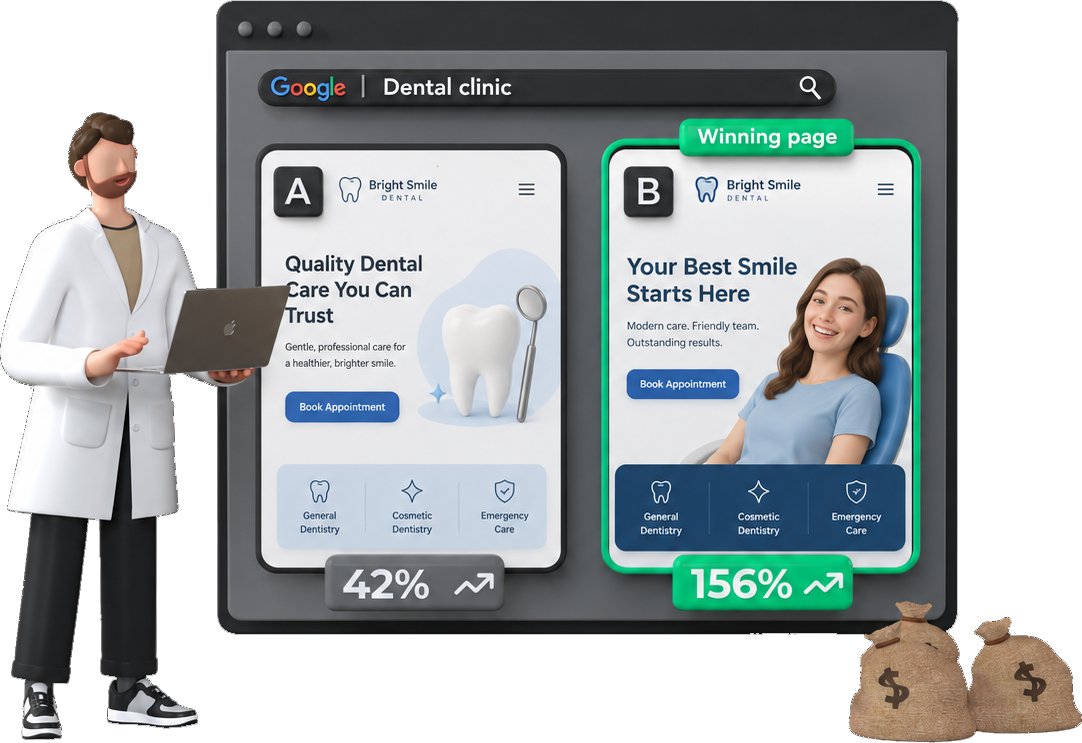
| Good CTR, low CVR | Ad-to-LP message match (landing-page-ad-mismatch-detector) | Page promise vs ad promise (landing-page-quick-audit) |
| Ad Strength stays Poor | Angle distribution (rsa-headline-generator) | Front-loaded character 45 |
| Asset performance Low past 30 days | Retire and replace (ad-copy-angle-generator) | Specificity audit |
Most ad accounts ship 15 headlines that say the same thing in different words, then wonder why the algorithm cannot find a winning combination. The gap between a headline that earns the click and one that gets skipped is not creativity. It is specificity, alignment, and proof. This framework replaces “variation” with structured angle distribution and replaces clever copy with claims that trace back to the landing page.
Every headline has one of six jobs: confirm relevance (keyword), communicate a benefit (outcome), establish credibility (proof), drive action (CTA), differentiate (why you), or create urgency (time pressure). If a headline cannot be assigned to one of these jobs, it is filler. If two headlines do the same job with different words, one is wasted. The specificity test is ruthless: could a competitor use this exact headline unchanged? If yes, it contains zero information. “4.9 Stars, 2,100 Reviews” passes. “Highly Rated” fails. Every claim must trace back to the landing page, because message match is the strongest predictor of both Quality Score and conversion rate.
Use this when CTR is below industry floor (3-6 percent on non-brand search depending on vertical), when Ad Strength stays at “Poor” or “Average,” when an account is rolling out new RSAs, or as a hygiene pass on any account that has not refreshed copy in 6+ months. It calibrates by vertical: ecommerce leads with price, shipping, reviews; lead gen pre-qualifies in the headline (“Enterprise Teams of 50+”) to filter unqualified clicks; B2B SaaS targets the user and the approver simultaneously; local services compresses availability + credibility + proximity into the headline; regulated verticals trade aggressive claims for proof-by-credential. It does not apply when the underlying landing page lacks the raw material to fuel proof or urgency angles. In that case, fix the page first; no amount of headline rotation manufactures evidence the page does not contain.
