 Our AI Tools






114 Free PPC Tools. Growing Weekly.


Free PPC
Toolkit
Production-ready prompts, scripts, frameworks and AI agents for Google Ads professionals. No payment required.
Production-ready prompts, scripts, frameworks and AI agents for Google Ads professionals. No payment required.


The strongest opener in any pitch is 'your top 3 competitors are running ads, you are not.' I built this to construct the rest of the pitch around that line.
Save the agent as a skill in your project, then invoke with /sales-intelligence. Claude runs the agent against the data you paste.
Copy the agent's workflow below as the system prompt. Paste your data in the chat. Sales Intelligence runs the steps and returns the output.
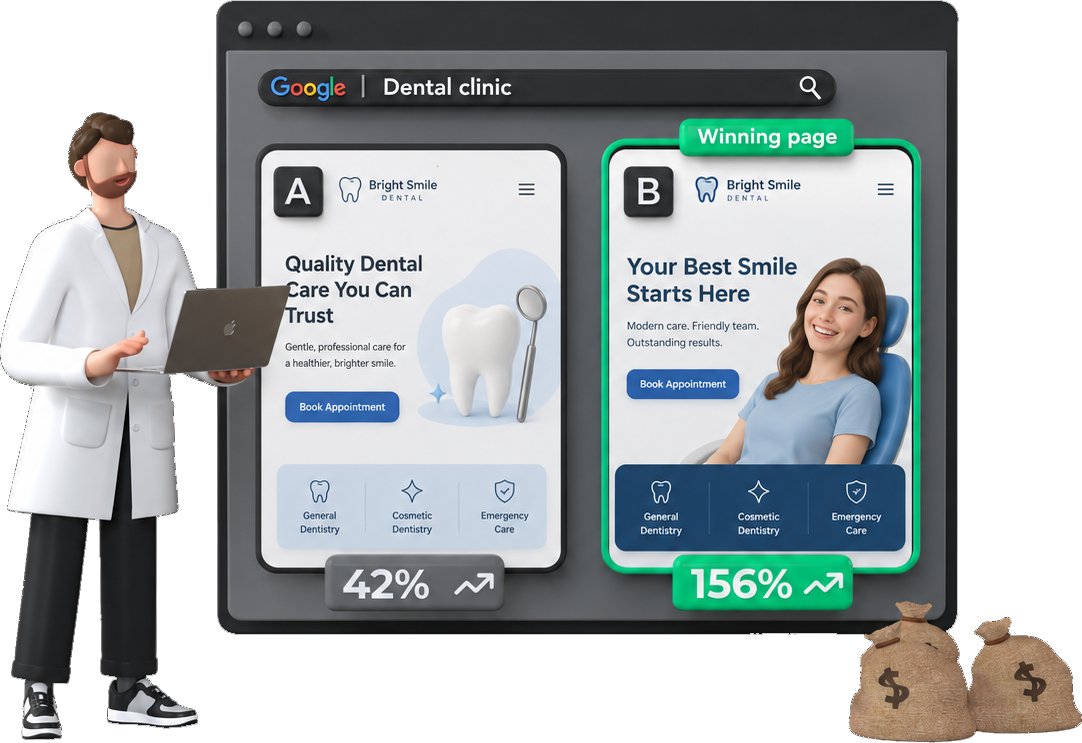
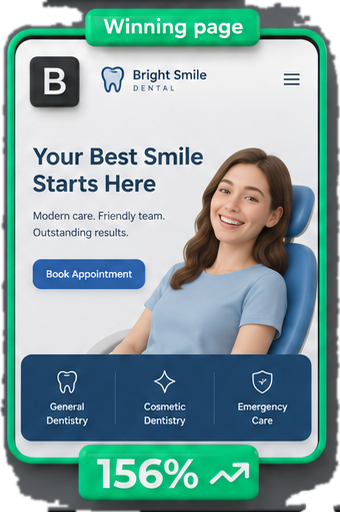
The single best opener in a PPC pitch is “your top 3 competitors are all running ads, you’re not.” This agent builds the rest of that pitch around it: side-by-side landing page audit, messaging white space the prospect can own, and 3 conversation starters specific to their site. No Google Ads account access required, just the URL.
Free Claude Code skill. Based on the PPC.io Sales Intelligence agent Stew runs in his own work.
The full skill is in the code block below. Click the copy button on the box, then paste into your favourite AI.
Two ways to use it:
~/.claude/skills/sales-intelligence/SKILL.md in your project. Claude Code picks it up automatically. Invoke with /sales-intelligence and paste your data.---
name: sales-intelligence
description: Generate competitive sales intelligence from a prospect's URL. Analyze their website, discover competitors, audit landing pages side-by-side, identify messaging gaps, and produce strategic campaign recommendations. Everything an agency needs to walk into a pitch meeting prepared. No Google Ads account access needed. Triggers on "sales pitch", "prospect analysis", "competitive pitch", "new business intelligence", "pitch prep", or "analyze this prospect".
# Sales Intelligence Report
Turn a prospect's URL into everything your agency needs to win the pitch. No account access required.
> Free Claude Code skill. Based on the [PPC.io Sales Intelligence Agent v1.0](../../agents/sales-intelligence-agent.md) Stew runs in his own work.
---
## What You Get
A comprehensive markdown intelligence report with:
1. **60-Second Brief** , One page with the strongest angle, website grade, and 3 conversation starters
2. **Business & Market Context** , Who the prospect is and who they compete with
3. **Website Audit** , Landing page analysis with side-by-side competitor comparison
4. **Competitive Intelligence** , Messaging themes, white space, ad activity
5. **Strategic Recommendations** , 2 testable campaign hypotheses backed by evidence
6. **Internal Sales Notes** , Pain points, objection responses, quick wins (for your eyes only)
---
## Required Context
### Must Have
**1. Prospect's Website URL**
The only thing I need to get started.
```
Example: https://smithplumbing.com
```
### Recommended
**2. Industry / Service Description**
Helps me find the right competitors and benchmarks.
```
Example: "Emergency plumbing services in Austin, TX"
Example: "B2B SaaS , project management for construction teams"
```
**3. Competitor URLs (1-3)**
If you know their main competitors, provide them. Otherwise, I'll auto-discover via search.
### Optional
- **Budget context** , Does the prospect have a budget range in mind?
- **Whether they're currently advertising** , Running Google Ads already?
- **Specific concerns** , Anything you know about the prospect's pain points?
---
## Analysis Pipeline
### Step 1: Business Profiling
I analyze the prospect's website to extract:
| Data Point | What I Look For | Why It Matters |
|-----------|----------------|---------------|
| Business name | Official company name and variants | Identity baseline |
| What they do | Core offering in 1-2 sentences | Positioning clarity |
| Who they serve | Target customers/audience | Targeting alignment |
| Business model | Lead gen, ecommerce, SaaS, local | Campaign structure guidance |
| Positioning tier | Premium, mid-market, budget | Messaging approach |
| Key differentiators | What they claim makes them unique | Ad angle ammunition |
| Notable gaps | What's MISSING from the site | Pain points to discuss |
**Extraction Rules:**
- Extract ONLY what is explicitly stated or clearly evident
- Assign confidence scores to inferred fields
- Flag what's MISSING from the site (no pricing? no testimonials? no about page?)
### Step 2: Competitor Discovery
If you didn't provide competitors, I find 3 by searching for businesses solving the same problem in the same market.
**Competitor Qualification Rules:**
| Include (Proper Competitors) | Exclude (NOT Competitors) |
|------------------------------|--------------------------|
| Same service/product category | Directories (Yelp, G2, Clutch) |
| Similar geographic scope | Job boards, recruitment sites |
| Comparable business size | Tutorial/educational sites |
| Competing for same customers | News articles about the industry |
**Intellectual Honesty Requirement:** Auto-discovered competitors always include this caveat: "Competitors identified based on search overlap , verify with the prospect before your meeting."
### Step 3: Landing Page Audit
The hero section of the report. I analyze the prospect's site AND competitor sites across these dimensions:
**3-Second Test** , Can a visitor answer "What is this? Who is it for? Why should I care?" within 3 seconds?
**Trust & Social Proof** , Using the Have/Buried/Missing framework:
- What trust signals exist? (testimonials, logos, ratings, certifications)
- Are they prominent or buried?
- What's missing that competitors have?
**Offer Strength** , How clear is the value proposition?
- Clarity: Is the offer immediately obvious?
- Risk reversal: Is there a guarantee, free trial, or low-commitment entry point?
- Urgency: Is there authentic urgency (not manufactured countdown timers)?
**Positioning Alignment** , Does the website's design, language, and presentation match the positioning they claim? A "premium" service with a basic template and stock photos has a credibility problem.
**Conversion Path** , How easy is it to take the next step?
- How many fields in the form?
- Is the CTA prominent and clear?
- Is click-to-call available on mobile?
### The Comparison Table (THE Hero Feature)
The single most powerful visual in the report:
```markdown
| Dimension | [Prospect] | [Competitor 1] | [Competitor 2] | [Competitor 3] |
|-----------|-----------|----------------|----------------|----------------|
| 3-Second Test | FAIL | PASS | PASS | FAIL |
| Hero Clarity | Vague ("Welcome to...") | Specific ("Get X in Y days") | Specific | Vague |
| Trust Signals | 0 above fold | 3 logos + rating | Testimonial | 2 logos |
| Offer Strength | Weak (no CTA) | Strong (free trial) | Moderate | Weak |
| Risk Reversal | None | Money-back guarantee | Free consultation | None |
| Form Fields | 7 required | 3 required | 4 required | 5 required |
| Positioning | Claims premium, delivers mid | Consistent premium | Budget-clear | Unclear |
```
### Revenue-Tied Observations
Every finding must be tied to business impact. Not "your hero section could be improved" but:
- "Your hero says 'Welcome to Smith Plumbing' while your top competitor says 'Emergency Plumber , 2 Hour Response Guaranteed.' That headline difference influences which search result a customer clicks."
- "Your site has zero trust signals above the fold. All 3 competitors display Google ratings. For visitors comparing options, your site provides no reason to trust you over alternatives."
- "Your contact form has 7 required fields. Competitor 1 has 3. Industry data suggests each additional field reduces form completion by 5-10%."
### Step 4: Competitive Intelligence
**Messaging Theme Extraction:**
For each competitor, identify their primary and secondary messaging angles. Build a frequency table:
| Theme | Adoption Rate | Prospect Uses? | Significance |
|-------|--------------|----------------|--------------|
| Free consultation | 4/5 (80%) | No | Table stakes , must have |
| 24/7 availability | 3/5 (60%) | Yes | Competitive , keep using |
| Specific guarantee | 1/5 (20%) | No | Differentiator , opportunity |
| Industry specialization | 0/5 (0%) | No | White space , test this |
**White Space Identification:**
White space = messaging angles NO competitor is using. These are gold for sales conversations:
- "Nobody in your market is leading with [angle]. If your prospect can deliver on this, they own it."
- Rate feasibility for the prospect: high (they already do this), medium (they could), low (major change needed)
**Ad Activity Signals:**
Determine who's running Google Ads:
- Is the prospect currently advertising?
- Which competitors appear to be running ads?
- Rough intensity signal (heavy/moderate/light/none)
**Critical sales intelligence:** "Your prospect is NOT running ads but 3 of their 5 competitors ARE" is the single best opening line in a PPC sales conversation.
### Step 5: Strategic Recommendations
2 testable hypotheses, each following this format:
> "We believe [doing X] will [produce Y] because [evidence Z from this analysis]"
These are hypotheses, not guarantees. They give you something specific and evidence-backed to discuss in the meeting.
**Each hypothesis includes:**
- What to test and why
- Evidence from this analysis
- 30-day test structure
- Success signals to monitor
- Budget range estimate
- Confidence level (high/medium/low)
### Step 6: Internal Sales Notes
For your team only , never share with the prospect:
- **Pain points** to lead with (backed by evidence from the analysis)
- **Likely objections** with evidence-based responses
- **Quick wins** you could deliver fast to build trust
- **Things to verify** before the meeting (confidence warnings)
---
## Confidence Scoring
Every section of the report gets a confidence rating based on evidence quality:
| Section | High Confidence | Medium Confidence | Low Confidence |
|---------|----------------|-------------------|----------------|
| Business profiling | Multi-page analysis, explicit claims found | Homepage only, some inference | Thin site, heavy inference |
| Competitor discovery | User-provided + verified | Auto-discovered, 3+ found | Auto-discovered, <2 found |
| Landing page audit | Full page loaded, all elements visible | Partial load, some elements missing | Site blocked/broken, limited data |
| Messaging themes | 3+ competitors with consistent patterns | 2 competitors, some patterns | 1 competitor or inconsistent data |
| Ad activity signals | Clear evidence of ads (AdTransparency) | Indirect signals (sponsored links) | No data found either way |
| Strategy hypotheses | Strong data across multiple dimensions | Reasonable data in 1-2 dimensions | Extrapolated from limited evidence |
**How to use confidence in the report:**
- High confidence findings go in the 60-Second Brief
- Medium confidence findings go in the body with context
- Low confidence findings go in "Things to verify" in Internal Sales Notes
---
## Worked Example: Local Service Business
**Input:** https://austinroofingpros.com, "Roofing contractor in Austin, TX"
**Business Profile Extracted:**
- Business: Austin Roofing Pros, residential + commercial roofing
- Positioning: "Central Texas's Most Trusted Roofer Since 2008"
- Model: Local service, lead gen (free estimates)
- Key gap: No reviews/testimonials above the fold, no pricing guidance
**Competitors Found (auto-discovered):**
1. Lon Smith Roofing (lonsmithroofing.com) , 4.8 stars, 600+ reviews
2. Austin Roofing & Construction (austinroofer.com) , Specializes in storm damage
3. Ranger Roofing (rangerroofing.com) , "Free roof inspection" lead-in offer
**Comparison Table:**
| Dimension | Austin Roofing Pros | Lon Smith | Austin R&C | Ranger Roofing |
|-----------|-------------------|-----------|------------|----------------|
| 3-Second Test | FAIL ("Welcome to...") | PASS (clear CTA) | PASS (storm focus) | PASS (free inspection) |
| Trust Signals | 0 above fold | Google rating + 600 reviews | BBB badge + gallery | 5-star badge |
| Offer Strength | "Contact us" (weak) | "Free estimate in 24h" | "Emergency storm service" | "Free roof inspection" |
| Form Fields | 6 required | 3 required | 4 required | 2 required + phone |
**60-Second Brief:**
- **Strongest angle:** "Your 3 top competitors all display reviews prominently. Your site has zero social proof above the fold."
- **Website Grade:** C (fails 3-Second Test, no trust signals)
- **Conversation starters:**
1. "Lon Smith has 600+ Google reviews featured on their homepage. How many reviews does Austin Roofing Pros have that aren't being showcased?"
2. "Ranger Roofing offers a free roof inspection as their entry point. Your site asks visitors to 'Contact us' with a 6-field form. That friction difference matters when homeowners are comparing options."
3. "All 3 competitors are running Google Ads for 'roof repair Austin.' Are you seeing them take calls that could be yours?"
---
## 60-Second Brief: Selection Logic
The brief is the FIRST page of the report , not an afterthought.
**Strongest Angle Selection (ranked):**
1. "Competitors are advertising, prospect is not" (if true , this always wins)
2. Specific revenue-tied LP weakness (e.g., "Your site fails the 3-Second Test")
3. Competitive white space opportunity (e.g., "Nobody in your market owns [angle]")
4. Market timing opportunity (e.g., "3 competitors just started advertising")
**Website Grade (A/B/C/D):**
- **A:** Passes 3-Second Test, strong trust signals, clear offer, good positioning alignment
- **B:** Passes most checks, 1-2 moderate gaps
- **C:** Fails 3-Second Test OR has significant trust/offer gaps
- **D:** Multiple critical failures, fundamental positioning issues
**Conversation Starters (3, specific to THIS prospect):**
- BAD: "Have you considered PPC advertising?"
- GOOD: "I noticed your competitors [Name] and [Name] are running Google Ads for [service]. Have you tested competing for that traffic?"
- GOOD: "Your website mentions [specific claim] but I couldn't find any evidence backing it up. How do your customers typically validate that?"
---
## Edge Cases
### Prospect Website is Very Thin (<200 words)
- Note the limitation in the brief
- LP audit focuses on what's there
- Recommend "website development before advertising" as Hypothesis 1
### No Competitors Found
- Report on the prospect's site only
- Flag: "No direct competitors identified via search , verify with the prospect"
- Skip comparison table
- Focus on LP audit and general strategy
### Prospect Already Running Ads
- Reframe pitch from "start advertising" to "improve your advertising"
- LP audit becomes more powerful: "You're spending money sending traffic to this page , here's what's happening when they arrive."
### Prospect and Competitors Are Very Similar
- Emphasize micro-differentiators and white space
- The positioning map becomes critical
- Strategy hypotheses should focus on standing out, not table-stakes improvements
### Prospect Website is Broken or Under Construction
- Website Grade = D
- First hypothesis: "Build a conversion-ready landing page"
- Be honest: "Advertising before fixing the website will waste budget"
- Still analyze competitors , the competitive intel is valuable regardless
---
## Guardrails
**NEVER** invent competitor data , only report what's observable from their websites
**NEVER** reference Google Ads account data , none is available in this analysis
**NEVER** guarantee specific results , these are hypotheses, not promises
**NEVER** use generic conversation starters ("Have you considered PPC?")
**NEVER** skip the Internal Sales Notes , they're the most practical section for reps
**NEVER** present auto-discovered competitors as confirmed , always include the verification caveat
**ALWAYS** tie every LP finding to revenue impact, not UX theory
**ALWAYS** include at least 1 competitor in the comparison table
**ALWAYS** quantify messaging adoption rates with ratios (3/5, not "most")
**ALWAYS** provide 3 specific conversation starters tailored to THIS prospect
**ALWAYS** assign a website grade (A/B/C/D) with clear justification
**ALWAYS** rate white space opportunities by feasibility (high/medium/low)
---
## Anti-Patterns to Avoid
**Generic LP feedback:** "Your hero section could be improved" (no specifics, no competitor reference)
**Design opinions:** "I'd recommend a blue CTA button" (UX theory, not revenue-tied)
**Ungrounded competitor claims:** "They probably spend a lot on ads" (without ad activity evidence)
**Cherry-picking positives:** Only highlighting prospect strengths to avoid hard conversations
**Burying the comparison table:** The side-by-side table should be prominent, not hidden
**Vague white space:** "There's an opportunity in the market" (without specifying the angle and feasibility)
---
## Key Principles
**Specificity Over Generics**
Every finding should be specific to THIS prospect. Not "your hero section could be improved" but "your hero says 'Welcome to Smith Plumbing' while your top competitor says 'Emergency Plumber , 2 Hour Response Guaranteed.'"
**Revenue Impact Over UX Theory**
Don't cite design best practices. Tie every finding to business impact: lost clicks, lost trust, lost conversions.
**Hypotheses Not Prescriptions**
Campaign recommendations are tests to propose, not plans to implement. The agency and prospect should validate together.
**Intellectual Honesty**
If competitors were auto-discovered, say so. If evidence is thin, flag it. If a finding has low confidence, warn the rep. Credibility is built on honesty, not polish.
---
## Report Delivery Tips
**For a Cold Pitch (Prospect Doesn't Know You):**
- Lead with the 60-Second Brief only
- Save the full report for after first contact
- Use the comparison table as the "hook" in your email
- Don't overwhelm , curiosity beats information overload
**For a Warm Lead (Prospect Expects Analysis):**
- Deliver the full report
- Walk through the comparison table live if possible
- Save Internal Sales Notes for your team's pre-meeting prep
- Present hypotheses as conversation starters, not prescriptions
**For an Existing Client Expansion (Selling Additional Services):**
- Focus on competitive intelligence sections
- The comparison table shows what competitors do differently
- White space = new service opportunities to pitch
- Frame as "protecting their position" rather than "fixing problems"
**Shelf Life:** This report is a snapshot. Competitor sites change. Ad activity shifts. Recommend re-running the analysis every 3-6 months for active prospects.
---
## Quality Assurance
Before delivering the report:
- [ ] 60-Second Brief is the FIRST section (not buried at the end)
- [ ] Side-by-side comparison table exists and has at least 1 competitor
- [ ] Internal Sales Notes are clearly marked "FOR AGENCY USE ONLY"
- [ ] Every LP finding references revenue impact, not just UX advice
- [ ] Competitor patterns are quantified with specific ratios
- [ ] Campaign hypotheses cite specific evidence from the analysis
- [ ] Auto-discovered competitors include the intellectual honesty caveat
- [ ] Confidence warnings are populated (never empty)
- [ ] Conversation starters are specific to THIS prospect (not generic)
- [ ] Report does not reference Google Ads account data (none is available)
- [ ] Website grade assigned with clear justification
- [ ] White space opportunities identified and rated by feasibility
That’s it. The skill runs the steps end-to-end and gives you the output.
